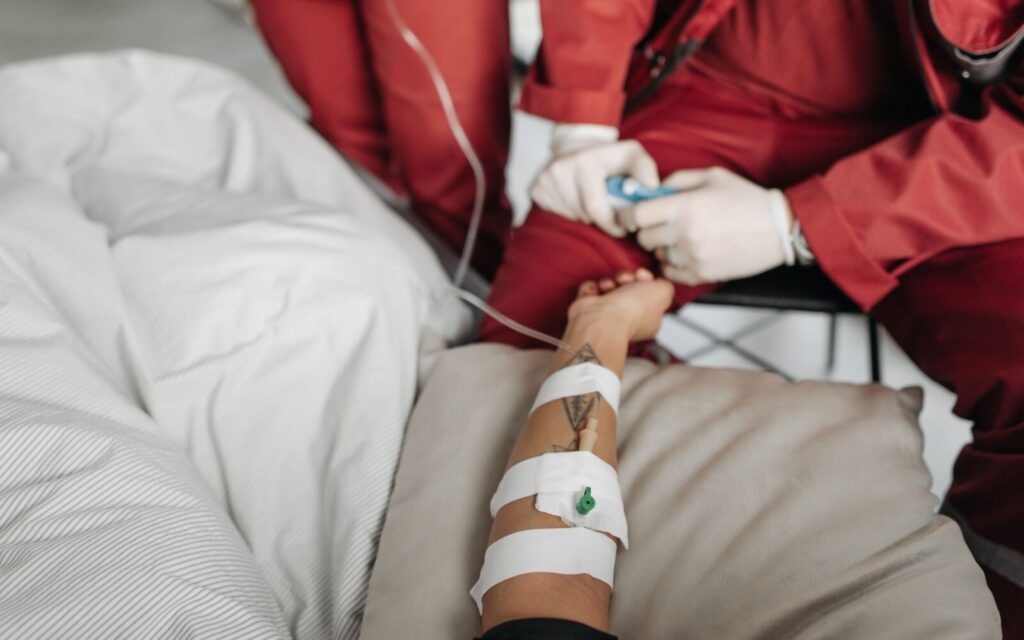
The FDA approved Imaavy (nipocalimab-aahu) for warm autoimmune hemolytic anemia, or wAIHA, in adults and adolescents 12 years of age and older who are currently or were previously treated with corticosteroids. The approval makes Imaavy the first FDA-approved drug specifically for wAIHA, a rare autoimmune disorder in which IgG antibodies mark red blood cells for destruction faster than the body can replace them.
Warm autoimmune hemolytic anemia destroys red blood cells through IgG antibodies
Warm autoimmune hemolytic anemia is caused by autoantibodies, usually immunoglobulin G, that bind to red blood cells at normal body temperature. Those antibody-coated cells are then removed by the immune system, producing hemolysis and anemia.
FDA estimates the condition affects roughly 1 to 3 people per 100,000 each year. Symptoms can include fatigue, shortness of breath, weakness, jaundice, and rapid heart rate, although severity varies widely.
Until now, treatment often began with corticosteroids, followed by therapies such as rituximab or other immunosuppressive drugs when disease persisted or relapsed. None was specifically FDA-approved for wAIHA.
Imaavy works by blocking the FcRn antibody recycling pathway
Nipocalimab is a monoclonal antibody that binds the neonatal Fc receptor, or FcRn. FcRn normally protects IgG antibodies from intracellular breakdown and recycles them back into circulation.
Blocking FcRn changes that balance. More IgG is degraded, lowering total circulating IgG as well as the pathogenic anti-red-blood-cell IgG antibodies that drive wAIHA.
FDA pharmacodynamic data show reductions in both total IgG and anti-red-blood-cell IgG autoantibodies during treatment. This mechanism differs from corticosteroids, which broadly dampen immune activity, and from B-cell-directed treatments such as rituximab, which reduce antibody-producing cell populations indirectly.
Our TYK2 and JAK1 explainer reviews another way modern autoimmune drugs target specific immune pathways rather than relying only on broad immunosuppression.
ENERGY tested two dosing strategies against placebo
The phase 2/3 ENERGY study was randomized, double-blind, and placebo-controlled. The published analysis included 115 participants with wAIHA who had hemoglobin below 10 g/dL, evidence of active hemolysis, and a positive direct antiglobulin test.
Participants were assigned to nipocalimab 30 mg/kg every 4 weeks, nipocalimab 15 mg/kg every 2 weeks, or placebo for 24 weeks. Stable background wAIHA therapy was allowed.
FDA’s efficacy decision centered on the approved regimen: 38 patients receiving 30 mg/kg every 4 weeks compared with 39 receiving placebo.
The approved dose significantly increased durable hemoglobin responses
A durable hemoglobin response was defined as hemoglobin of at least 10 g/dL together with an increase of at least 2 g/dL from baseline at three consecutive visits spanning at least 28 days, beginning by week 16, without rescue therapy.
At the approved dose, 9 of 38 patients, or 23.7%, achieved that response compared with 3 of 39 patients, or 7.7%, on placebo. The difference in response rates was 16.0 percentage points, with a 95% confidence interval of 0.1 to 31.9 and a one-sided P value of 0.015.
The published ENERGY report described nipocalimab as producing a “rapid hemoglobin response” at the approved dose.
The lower-dose 15 mg/kg every-2-weeks arm did not meet the study’s prespecified threshold for significance versus placebo, which is why the approved wAIHA regimen is 30 mg/kg every 4 weeks.
Fatigue improved, but the endpoint was supportive rather than definitive
Fatigue is a major burden in hemolytic anemia because reduced hemoglobin limits oxygen delivery. In the FDA label, the least-squares mean improvement in FACIT-Fatigue score at week 24 was 2.95 points with Imaavy versus a slight worsening of 0.56 points with placebo, for a between-group difference of 3.51 points.
The peer-reviewed ENERGY publication also reported nominal improvements in fatigue and a modest reduction in average prednisone dose with the approved regimen. These analyses support the hemoglobin findings but were not the basis of the primary efficacy claim.
The dose is given by IV infusion every four weeks
For wAIHA, the recommended initial dose is 30 mg/kg by intravenous infusion over at least 30 minutes. Four weeks later, patients receive another 30 mg/kg infusion, then continue every four weeks. Subsequent infusions are given over at least 15 minutes.
The label recommends reviewing age-appropriate vaccination before treatment. Live vaccines are not recommended during therapy because FcRn blockade lowers circulating IgG and may affect immune protection.
The safety profile reflects FcRn blockade and infusion therapy
The most common adverse reactions in wAIHA were peripheral edema, diarrhea, and fever. Dizziness, urinary tract infection, and headache were also reported more often than with placebo.
In the wAIHA study and extension, infusion-related reactions occurred in 11% of patients treated with Imaavy. Reactions included symptoms such as headache, fatigue, influenza-like illness, rash, nausea, dizziness, chills, and skin redness.
The label also warns about infections and hypersensitivity reactions. Because the drug reduces IgG, clinicians are advised to monitor patients for infection and consider vaccination status before treatment begins.
Imaavy was not a brand-new molecule in 2026
Imaavy had already received FDA approval in 2025 for generalized myasthenia gravis in antibody-positive adults and adolescents 12 years and older. The 2026 action expanded the label into warm autoimmune hemolytic anemia.
That matters because the safety profile of FcRn blockade was already being characterized in another autoimmune disease, even though wAIHA has its own risks and treatment context.
Why this approval matters beyond the response rate
The absolute durable-response rate, 23.7%, is not large, and most treated patients did not meet the study’s stringent primary endpoint. The significance of the approval is therefore not that Imaavy works for everyone.
What changes is the treatment framework. wAIHA now has a therapy approved specifically for the disease and aimed directly at the IgG antibody pathway responsible for red-cell destruction.
This is conceptually similar to other recent targeted blood-disorder therapies. Our hepcidin and polycythemia vera explainer shows how another blood disease can be treated by targeting a specific biologic control point rather than relying only on older supportive strategies.
What the evidence cannot yet answer
The approved-dose efficacy comparison included only 77 patients, 38 on Imaavy and 39 on placebo. That is a small randomized dataset, even for a rare disease.
The double-blind period lasted 24 weeks, so the trial does not yet define how durable responses remain over years or how many patients can safely reduce or stop other immunosuppressive therapies long term.
The ENERGY study was sponsored by Johnson & Johnson, and several authors were company employees. The randomized, placebo-controlled design strengthens the evidence, but longer independent follow-up will be important.
The FDA approval also does not establish that Imaavy is superior to rituximab or every other off-label treatment used in wAIHA because those therapies were not directly compared in the pivotal trial.
The bigger shift is from broad immunosuppression to targeted antibody removal
Warm autoimmune hemolytic anemia has long been treated with therapies that suppress immune activity at a broad level. Imaavy approaches the disease differently by accelerating the removal of circulating IgG antibodies, including those attacking red blood cells.
That targeted mechanism does not eliminate the complexity of wAIHA, but it gives clinicians the first FDA-approved option designed specifically around the antibody biology of the disease.
References
- U.S. Food and Drug Administration. FDA Approves First Drug for Warm Autoimmune Hemolytic Anemia. August 25, 2026. FDA approval notice.
- Fattizzo B, Murakhovskaya I, Ueda Y, et al. Nipocalimab for warm autoimmune hemolytic anemia: results from the phase 2/3 randomized, double-blind ENERGY study. Blood. Published online August 28, 2026. DOI: 10.1182/blood.2026034036.