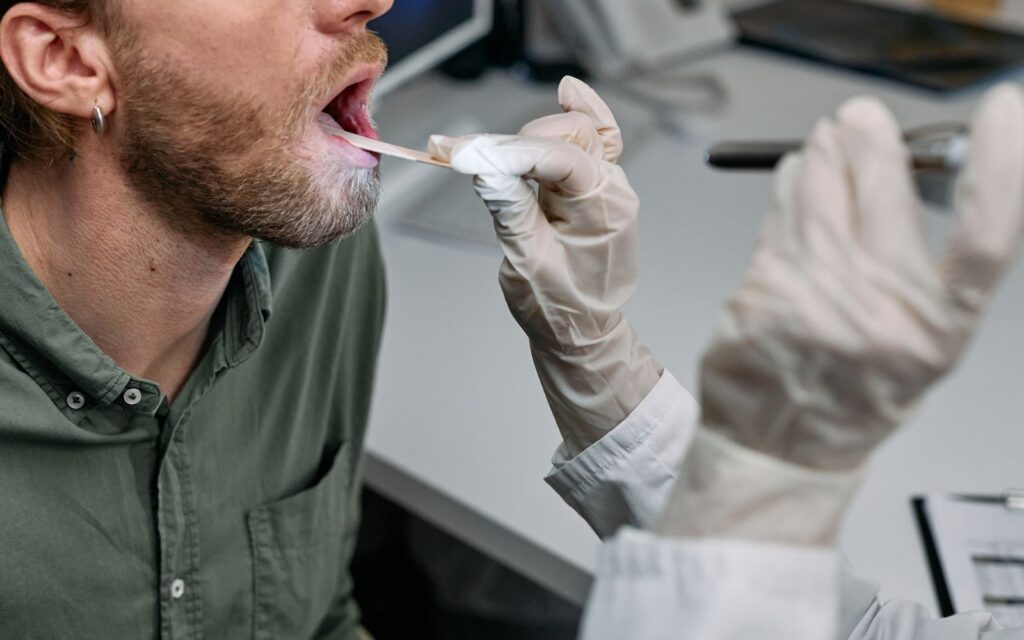
The FDA granted accelerated approval to Voceryq, the first plasmid DNA-based immunotherapy authorized in the United States, on October 30, 2026, to reduce repeat surgery for adults with recurrent respiratory papillomatosis. The decision draws on a 32-person, open-label phase 1/2 study published in Nature Communications in 2025 and reviewed by the agency, although the specific approval analysis focuses on a 26-person subgroup with a higher pretreatment surgery burden.
HPV-related growths can repeatedly obstruct the voice box
Recurrent respiratory papillomatosis (RRP) is a rare, persistent disease caused mainly by human papillomavirus (HPV) types 6 and 11. These infections lead to papillomas, generally benign wart-like growths, most commonly on the larynx and vocal cords. Patients may develop hoarseness, altered voice, persistent cough, and, when growths obstruct the airway, difficulty breathing.
Surgery removes visible papillomas but often fails to prevent regrowth because HPV persists in affected tissue. Some patients undergo repeated procedures, risking scarring and damage to the structures involved in speaking. A small proportion of cases may undergo malignant transformation, but RRP itself should not be confused with HPV-related cancer.
Voceryq, developed by Inovio Pharmaceuticals and previously designated INO-3107, is approved for reducing the frequency of surgical papilloma excisions in adults. It is not an approved treatment for all HPV infections, a substitute for preventive HPV vaccination, or a proven cure for RRP.
Two DNA plasmids are designed to direct immune cells toward HPV-infected tissue
The product contains two engineered plasmids, small circular DNA molecules. One provides instructions for proteins associated with HPV types 6 and 11; the other encodes interleukin-12 (IL-12), a signaling molecule intended to strengthen the cellular immune response. The proposed mechanism is to help the body generate HPV-specific T cell responses that recognize infected airway tissue.
Delivery requires an intramuscular injection followed by electroporation using the CELLECTRA 5PSP device. Brief electrical pulses temporarily increase cell-membrane permeability, helping DNA enter cells. According to the FDA prescribing information, patients receive four doses, three weeks apart, after surgical removal of visible papillomas to establish minimal residual disease.
The immune strategy differs from personalized cancer vaccines, which can train immune cells against tumor-specific mutations, and from engineered viral immunotherapy for melanoma, which uses a different biological platform. The common principle is immune recognition, not an equivalent clinical indication or efficacy.
The approval analysis found seven surgery-free patients among 26 evaluated
The supporting trial enrolled 32 adults who had required at least two operations to remove laryngotracheal papillomas during the previous 12 months, including an operation scheduled when they entered the study. Every participant received the investigational treatment; there was no randomized placebo or untreated comparison group.
For the approval’s specified efficacy analysis, the FDA focused on 26 participants who had undergone at least three surgeries before treatment. Seven of those 26, or 27%, required no additional surgery in the first 12 months after treatment. This is a defined outcome in a selected subgroup, not a 27% cure rate or proof that the same proportion would avoid surgery without a comparison group.
The 2025 Nature Communications paper reported a different, broader endpoint: 26 of all 32 treated adults (81%) underwent at least one fewer surgery in the following year than during the pretreatment year. Nine of the 32 needed no surgery in the study’s one-year reporting window. The 81% reduction-in-surgery proportion and the FDA’s 27% surgery-free proportion have different denominators and definitions and should not be presented as interchangeable.
Biological analyses in that paper also documented HPV-specific T cell activity and evidence of immune-cell trafficking into papilloma tissue. Those laboratory findings support the proposed mechanism but do not establish that HPV was eliminated from the body. They also complement broader work on how T cell persistence and functional state shape immune responses.
Longer follow-up suggests sustained activity but remains uncontrolled
An additional analysis published online in The Laryngoscope on October 30, 2026, followed 28 of the original 32 participants into a second year. The researchers reported that the mean annual number of surgeries fell from 4.1 before treatment to 1.7 during the first year and 0.9 during the second year in the analyzed population. The report also described persistent HPV-directed T cell responses in subsets with available specimens.
These observations provide longer-term context, but an extension of the same small, nonrandomized cohort cannot resolve the contribution of natural fluctuations in disease severity, differences in follow-up, or other clinical factors. The approval itself rests on reduced surgical procedures, and confirmatory research is still required.
Injection and electrical-delivery reactions need clinical monitoring
In the clinical study, the most commonly reported adverse reactions included injection-site reactions, headache, fatigue, elevated blood pressure, nausea, and dizziness. Electroporation can also cause short-lived muscle contractions, transient bleeding, pain, and faintness or vasovagal symptoms. The FDA label recommends monitoring for local reactions for at least 30 minutes after treatment.
The prescribing information instructs clinicians to avoid delivery into limbs with pacemakers or implantable defibrillators on the same side, metal implants, or skin abnormalities at the treatment site. The label identifies no formal contraindications, but that does not mean the procedure is risk-free. Safety and efficacy in children have not been established, and treatment requires a clinician trained to use the delivery device.
What the evidence cannot yet answer
The central limitation is the study design. Thirty-two people received treatment, no randomized control group was included, and the main FDA efficacy result comes from only 26 participants with frequent prior surgery. The trial was sponsored by the product developer, Inovio Pharmaceuticals, and company-affiliated researchers participated in the published analysis. These circumstances do not invalidate the findings, but they matter when interpreting the size and durability of the apparent benefit.
The study does not show permanent elimination of HPV, prevention of HPV transmission, or reduced progression to cancer. It also cannot tell clinicians which patients will respond, how often retreatment might be needed, or whether every treated patient would otherwise have continued at the same pretreatment surgery frequency.
The FDA used its accelerated approval pathway because fewer surgeries are considered an intermediate clinical endpoint reasonably likely to predict clinical benefit. Continued approval may depend on subsequent trials verifying and describing that benefit. The practical advance is an additional option for selected adults who face repeated airway procedures, with the durability and comparative effectiveness of treatment still to be established.
References
- Morrow MP, et al. DNA immunotherapy for recurrent respiratory papillomatosis (RRP): phase 1/2 study assessing efficacy, safety, and immunogenicity of INO-3107. Nature Communications. 2025;16:1518. DOI: 10.1038/s41467-025-56729-6.
- Amin MR, et al. DNA Immunotherapy (INO-3107) Long-Term Efficacy Supported by Enhanced Immunogenicity in HPV-6/11 RRP. The Laryngoscope. Published online October 30, 2026. DOI: 10.1002/lary.71016.
- U.S. Food and Drug Administration. FDA Approves First Plasmid DNA-based Immunotherapy for Adults with Recurrent Respiratory Papillomatosis. October 30, 2026. FDA announcement; prescribing information.