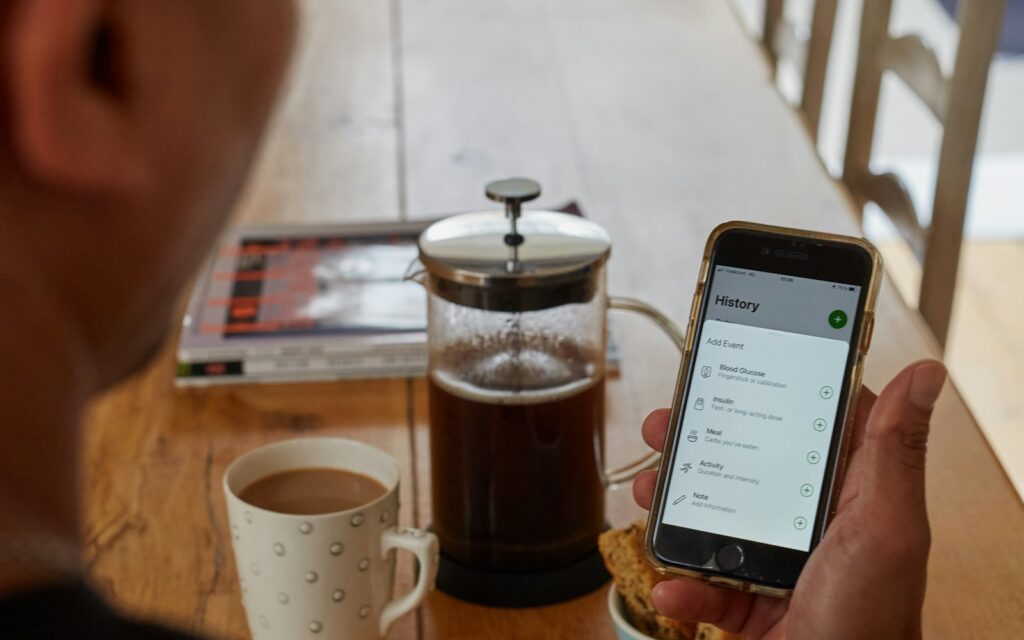
Continuous glucose monitoring improved blood sugar control in adults with type 2 diabetes who were not taking insulin, according to the CONNECT randomized trial published in The New England Journal of Medicine on October 14, 2026. The 26-week study enrolled 283 adults across 22 US primary care practices and found a larger reduction in glycated hemoglobin among those assigned to a wearable glucose sensor than among those receiving routine care.
The trial tested glucose sensors in people who were not using insulin
Continuous glucose monitoring (CGM) measures glucose in fluid beneath the skin through a small wearable sensor. Unlike a conventional finger-stick measurement, it generates readings throughout the day and can show how glucose changes after meals, overnight, or during activity. The device measures interstitial glucose rather than blood glucose directly, so readings may lag behind rapid changes in blood glucose.
CGM has an established role in managing type 1 diabetes and insulin-treated type 2 diabetes. Its value in people who do not take insulin has been less certain, particularly because treatment decisions in this group often depend on oral or injected non-insulin medications, diet, physical activity, and periodic laboratory testing.
The CONNECT trial recruited 283 adults with type 2 diabetes managed in primary care who were not using insulin. Participants were 21 to 84 years old. Researchers randomly assigned 145 to CGM and 138 to routine care, then followed them for 26 weeks at 22 US primary care practices. The primary outcome was glycated hemoglobin (HbA1c), a laboratory measure reflecting average glucose exposure over roughly the preceding two to three months.
The trial adds clinical evidence to ongoing investigations of insulin resistance in skeletal muscle, a major contributor to the disrupted glucose regulation of type 2 diabetes. A sensor does not directly correct insulin resistance, but it can give patients and clinicians information with which to adjust everyday management.
HbA1c fell further in the CGM group after 26 weeks
Mean HbA1c declined from 8.8% at baseline to 7.2% at week 26 among participants assigned to CGM. In the routine-care group, mean HbA1c declined from 8.7% to 8.0% during the same period.
After the researchers adjusted for the trial design and baseline differences, the between-group difference was 0.9 percentage points in favor of CGM (95% confidence interval, 0.6 to 1.1 percentage points greater reduction; P<0.001). This is an absolute difference in HbA1c percentage points, not a 0.9% relative change in blood sugar and not a claim that CGM reduced diabetes complications by 0.9%.
The HbA1c results are clinically relevant because prolonged elevation of blood glucose is associated with complications affecting the eyes, kidneys, nerves, and cardiovascular system. However, CONNECT measured glucose control over 26 weeks; it did not demonstrate that wearing a sensor prevents heart attacks, kidney disease, or other long-term clinical outcomes.
CGM use also increased the proportion of time glucose remained between 70 and 180 milligrams per deciliter. This commonly used target is known as time in range. Compared with routine care, the CGM group spent an average of 21 percentage points more time in range (95% confidence interval, 16 to 26 percentage points; P<0.001).
More time in range did not come with a reported increase in severe low-glucose episodes
A central concern with more intensive glucose control is hypoglycemia, meaning an abnormally low glucose concentration. In CONNECT, there were no reported episodes of severe hypoglycemia. The percentage of time with sensor glucose below 70 milligrams per deciliter was also slightly lower in the CGM group, although the absolute between-group difference was small.
These safety findings should be interpreted within the trial’s population. People not using insulin generally have a different hypoglycemia risk profile from those treated with insulin, and 26 weeks of observation cannot characterize all uncommon harms or practical burdens. Adhesive reactions, discomfort, alarm fatigue, accuracy during rapid glucose changes, and the need for confirmatory finger-stick testing in selected situations remain considerations when using glucose sensors.
The study also fits within a broader shift toward assessing glucose management through more than occasional laboratory measurements. A separate FDA authorization of a wearable glucose and ketone monitor illustrates how the available devices and the kinds of metabolic measurements they provide are evolving. That product and the device used in CONNECT are different technologies and were not compared in this trial.
Glucose feedback offers a plausible explanation, but the trial did not isolate the mechanism
Researchers did not test CGM as a drug. Instead, the intervention gave participants more frequent access to glucose information while they continued to receive diabetes care. That information can reveal glucose responses to food and physical activity and may support conversations about medication choices. The randomized comparison establishes that the CGM-based care strategy improved glucose outcomes in the trial, but it does not establish which individual behavioral or clinical changes accounted for most of the benefit.
CGM should therefore be understood as a tool that can support management, rather than a treatment for the biological causes of type 2 diabetes. Diet, exercise, weight management, and appropriate medications remain important. For example, another randomized study covered by Bites of Bio found that a low-calorie diet and exercise intervention produced remission in some people with early-onset type 2 diabetes, an outcome distinct from improving glucose measurements through monitoring.
What the study cannot yet establish about long-term use and cost
The trial offers stronger evidence than an observational comparison because randomization reduces several sources of bias. Nevertheless, its conclusions are bounded by who participated and what was measured. CONNECT enrolled adults with established type 2 diabetes who were not treated with insulin and were receiving primary care. It did not enroll a general population of people without diabetes, so the results cannot justify routine CGM use in otherwise healthy adults.
The intervention lasted 26 weeks. It remains uncertain whether the HbA1c advantage persists after a year or longer, whether every patient needs continuous rather than intermittent sensor use, and how much of the benefit depends on clinician support, education, medication adjustments, or engagement with the readings. The trial was also not designed to establish whether broader CGM access is cost-effective across different insurance plans and patient groups.
Dexcom funded the study. The device manufacturer also has a commercial interest in wider use of CGM, making independent replication and pragmatic cost-effectiveness studies important. Industry funding does not invalidate randomization or the reported findings, but it is relevant context when interpreting calls for broad adoption.
The findings support a more individualized discussion about monitoring
For adults with type 2 diabetes whose HbA1c remains elevated despite non-insulin treatment, the CONNECT results provide a reason to discuss a glucose sensor with a clinician. The potential benefit may depend on whether the readings lead to decisions a patient can realistically act on, as well as device cost, insurance coverage, and personal preferences.
The researchers’ central conclusion was that CGM produced a larger HbA1c reduction and less hyperglycemia than routine care in adults with non-insulin-treated type 2 diabetes managed in primary care. Whether that improvement translates into sustained health benefits beyond the 26-week trial is the next question for longer-term studies.
References
- Oser TK, et al. Continuous Glucose Monitoring in Non-Insulin-Treated Type 2 Diabetes. New England Journal of Medicine. 2026;395:1717–1727. DOI: 10.1056/NEJMoa2608571.
- CONNECT Study Group. CGM for Adults with Type 2 Diabetes Not on Insulin Therapy: The CONNECT Randomized Controlled Trial. Diabetes. 2026;75(Suppl 1):1170-OR. DOI: 10.2337/db26-1170-OR.