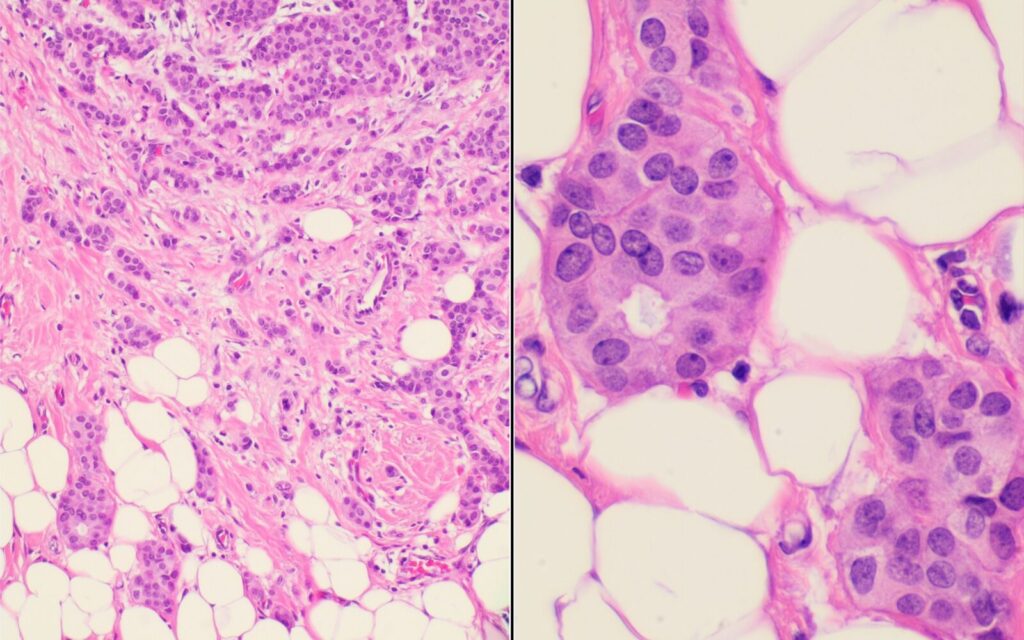
The U.S. Food and Drug Administration (FDA) approved Wilserdly (giredestrant) with everolimus on November 16, 2026, for adults with estrogen receptor (ER)-positive, human epidermal growth factor receptor 2 (HER2)-negative, ESR1-mutated locally advanced or metastatic breast cancer after specified prior endocrine treatment. The decision followed the phase 3 evERA Breast Cancer study, published in The New England Journal of Medicine. Among 207 participants with ESR1-mutated tumors, median progression-free survival was 10.0 months with giredestrant plus everolimus compared with 5.5 months using standard endocrine therapy plus everolimus.
The indication requires both an ESR1 mutation and previous endocrine therapy
The approval does not extend to every patient with hormone receptor-positive breast cancer. Eligible tumors must harbor an estrogen receptor 1 (ESR1) mutation detected by an FDA-authorized test. The disease must have recurred during or after endocrine-based adjuvant therapy, or progressed on at least one endocrine-based regimen for metastatic disease. The FDA also authorized FoundationOne Liquid CDx, a circulating tumor DNA (ctDNA) blood test, as a companion diagnostic.
ESR1 mutations can keep the estrogen receptor active even when estrogen production is suppressed, allowing tumors to become resistant to aromatase inhibitors. Our earlier article on ESR1 mutations and endocrine resistance explains how this occurs. The new approval makes molecular testing essential to identifying patients who may benefit from this regimen.
Giredestrant degrades the estrogen receptor while everolimus blocks mTOR signaling
Giredestrant is an oral selective estrogen receptor degrader (SERD). It antagonizes estrogen receptor signaling and promotes receptor degradation, including in tumors with certain ESR1 mutations. Everolimus inhibits the mammalian target of rapamycin (mTOR) pathway, which contributes to cancer-cell growth and can support resistance to endocrine treatment. Together, the agents target two distinct signaling mechanisms.
The recommended Wilserdly dose is 30 mg orally once daily with or without food. Everolimus was given at 10 mg orally once daily in evERA. The combination is fully oral, unlike regimens containing injectable fulvestrant, but this does not make it free of substantial adverse effects. See our overview of oral SERDs and established endocrine therapies for treatment-class context. Many trial participants had previously received CDK4/6 inhibitor treatment, which slows cell division by a different mechanism.
The trial reported a 62% lower hazard of progression or death in ESR1-mutated tumors
evERA was a randomized, open-label, multicenter phase 3 trial involving 373 adults with ER-positive, HER2-negative locally advanced or metastatic breast cancer after CDK4/6 inhibitor plus endocrine treatment. Of these, 183 were assigned giredestrant plus everolimus, and 190 received physician-selected exemestane, fulvestrant or tamoxifen plus everolimus. ESR1 mutations were identified in 207 participants.
In the ESR1-mutated subgroup, median progression-free survival was 10.0 months with giredestrant plus everolimus and 5.5 months with the comparator. The hazard ratio for progression or death was 0.38 (95% confidence interval, 0.27–0.54; P<0.0001). This corresponds to a 62% lower relative hazard over follow-up, not a 62% reduction in the absolute number of patients experiencing progression. The median progression-free survival difference was 4.5 months. Objective response rates were 27% and 14%, respectively, according to the FDA.
Across all 373 participants, median progression-free survival was 8.8 versus 5.5 months (hazard ratio, 0.56). In an exploratory analysis of tumors without detectable ESR1 mutations, the corresponding medians were 5.7 and 5.5 months, and the confidence interval around the hazard ratio included no benefit. The strongest evidence therefore supports the FDA’s ESR1-mutated indication, rather than an unrestricted use of giredestrant in advanced breast cancer.
Mouth sores, diarrhea and pneumonitis complicate the all-oral regimen
The FDA identified stomatitis, rash, fatigue, diarrhea, musculoskeletal pain, pneumonitis and nausea among the most common reactions with giredestrant plus everolimus. In the published trial, treatment-emergent adverse events occurred in 98.9% of the giredestrant combination group and 96.8% of the standard endocrine combination group. Stomatitis was reported in 47.3% versus 48.9%, and diarrhea in 26.9% versus 22.6%.
Both groups received everolimus, an important consideration when interpreting the safety comparison. The FDA’s Wilserdly labeling also warns about bradycardia, or slow heart rate, and embryo-fetal toxicity. Treatment requires assessment of the patient’s comorbidities, other medications, reproductive risks and ability to tolerate ongoing therapy.
What the evidence cannot yet answer
The trial was randomized but open-label, and its primary progression-free survival measure was investigator-assessed. Overall survival findings were immature at the primary analysis; an improvement in progression-free survival does not establish that patients live longer. The study did not directly compare giredestrant with every newer SERD or targeted treatment combination. It also excluded some patients with prior advanced-disease chemotherapy or oral SERD exposure, which limits how broadly the results can be applied.
The trial population was deliberately enriched for ESR1-mutated tumors, and the exploratory non-mutated subgroup did not show a comparable progression-free survival signal. Longer follow-up will be needed to clarify overall survival, longer-term adverse effects and optimal sequencing after earlier endocrine therapy. Genentech and F. Hoffmann–La Roche sponsored the trial and participated in its design and analysis; sponsor-funded medical writing support was disclosed in the peer-reviewed publication.
Wilserdly therefore adds a targeted option for patients with molecularly confirmed ESR1-mutated advanced breast cancer who meet the prior-treatment criteria. The pivotal evidence demonstrates longer time without progression in this defined population, rather than a proven cure or established survival extension.
References
- Mayer EL, Tolaney SM, Martín M, et al. Giredestrant plus Everolimus in Advanced Breast Cancer. N Engl J Med. 2026;395:1285–1298. DOI: 10.1056/NEJMoa2602457.
- U.S. Food and Drug Administration. FDA approves giredestrant in combination with everolimus for ER-positive, HER2-negative, ESR1-mutated locally advanced or metastatic breast cancer. November 16, 2026. FDA approval notice.