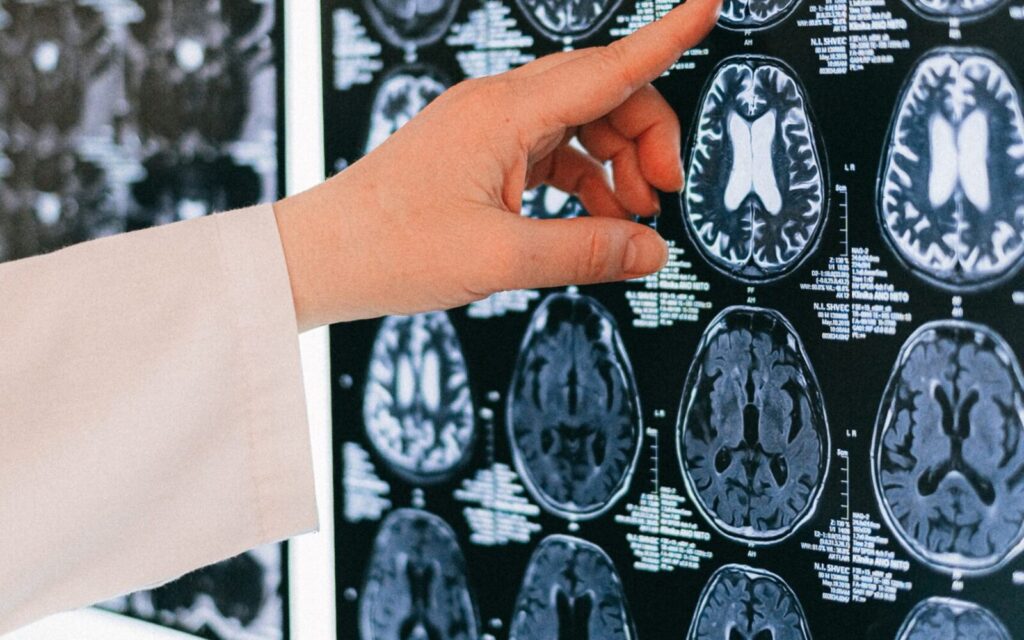
Researchers have identified a previously underappreciated brain pathway linking the basolateral amygdala to the dorsolateral striatum that can amplify stimulus-evoked grooming and is abnormally strengthened in a mouse model of obsessive-compulsive disorder, according to a study published in Neuron. The work suggests one way emotionally important cues might become tightly linked to repetitive actions, but it does not yet establish that the same circuit causes OCD symptoms in people.
OCD involves more than one brain region
Obsessive-compulsive disorder is characterized by intrusive thoughts, urges or images and repetitive behaviors or mental acts that a person feels driven to perform. Brain-imaging studies have long implicated cortico-striato-thalamo-cortical circuits, but the disorder is not thought to arise from a single abnormal brain area.
That complexity is one reason the new study is interesting. Rather than identifying another broad region associated with OCD, the researchers focused on a specific connection between two systems with complementary roles: the amygdala and the dorsal striatum.
The basolateral amygdala helps encode emotionally salient information. The dorsolateral striatum is involved in sensorimotor learning and behaviors that become increasingly automatic with repetition. A direct connection between the two could therefore provide a route through which emotionally important cues influence habitual actions.
The amygdala-to-striatum connection is sparse but functional
The researchers used anatomical tracing, electrophysiology, calcium imaging and optogenetics to map projections from the basolateral amygdala into the dorsal striatum of mice.
They found that amygdala neurons project directly to both the dorsomedial striatum and the dorsolateral striatum, but the populations were anatomically distinct. The projection to the dorsolateral striatum was relatively sparse, which may help explain why it has received less attention.
Despite being sparse, the connection was functional. Synapses from the amygdala preferentially targeted distal dendrites of striatal projection neurons in the dorsolateral striatum, a location that may allow them to modulate how those neurons integrate other incoming signals rather than simply drive activity on their own.
Stimulating the pathway strengthened cue-driven grooming
To test what the circuit actually does, the researchers paired a mild sensory stimulus, a small drop of water on the nose, with optogenetic activation of amygdala inputs to the dorsolateral striatum.
Water on the nose naturally triggers grooming in mice. Repeated activation of the pathway during that response increased grooming after the stimulus and prolonged grooming behavior after the pairing sessions.
The effect was not simply generalized hyperactivity. The researchers reported no corresponding increase in locomotor activity in the open-field test.
At the cellular level, repeated activation also produced heterosynaptic plasticity in dorsolateral striatal neurons. In other words, repeatedly activating the amygdala input changed the broader synaptic landscape of the striatal cells, not only the directly stimulated synapses.
The pathway was stronger in a mouse model of compulsive grooming
The team then examined Sapap3-deficient mice, a widely used model of compulsive behavior. These mice develop excessive grooming that can become severe enough to cause skin lesions and have been used to study neural mechanisms relevant to OCD-like behavior.
In these mice, basolateral amygdala input to the dorsolateral striatum was stronger than in control animals. Calcium recordings also indicated abnormal activity in the pathway.
The researchers went one step further and chronically inhibited activity in the basolateral amygdala before compulsive grooming emerged. That intervention prevented the later development of excessive grooming in the model.
Those findings support the idea that abnormal limbic input to sensorimotor striatal circuits can contribute to repetitive behavior in this experimental system.
The study offers a possible link between emotion and habit
One of the most intriguing implications is conceptual. OCD symptoms often feel tightly linked to specific internal or external cues. A thought, sensation or uncertainty can trigger intense distress, followed by a repetitive action intended to reduce that distress.
The new circuit provides a plausible biological mechanism for how emotionally salient information could gain increased control over habitual motor output. Repeated engagement of the amygdala-to-striatum pathway may strengthen the association between a cue and an action, making the response increasingly automatic.
That idea is consistent with the broader view that compulsions can involve an imbalance between goal-directed behavior and habitual responding. But the study does not show that this single pathway explains the full complexity of OCD.
The results are from mice, not patients with OCD
The most important limitation is that the experiments were performed in mice. The investigators did not image or stimulate this circuit in people with OCD, and they did not test whether the strength of the pathway correlates with symptom severity in patients.
The Sapap3 model is useful because it produces robust compulsive grooming and responds to some treatments used in OCD, but mouse grooming is not equivalent to human obsessions and compulsions.
Human OCD includes cognitive symptoms such as intrusive thoughts, checking, contamination fears, symmetry concerns and mental rituals that cannot be reproduced fully in an animal model.
The authors therefore frame the findings as a circuit mechanism relevant to compulsive motor behavior, not as proof that they have found “the OCD circuit.”
The pathway may eventually become a treatment target
Current OCD treatments include exposure and response prevention, selective serotonin reuptake inhibitors and, in severe treatment-resistant cases, neuromodulation approaches such as deep brain stimulation.
Better circuit mapping could eventually help make neuromodulation more precise. If future human studies confirm that a homologous amygdala-striatal pathway is consistently abnormal in certain patients, researchers could investigate whether treatment changes activity within that network.
That possibility is still speculative. The new study does not establish a clinical target, and there is no evidence yet that directly altering this pathway would improve OCD symptoms in people.
The work adds specificity to a broader circuit model of OCD
OCD research has traditionally emphasized loops connecting frontal cortex, basal ganglia and thalamus. The present study does not replace that model. Instead, it adds a specific limbic-to-sensorimotor connection that may influence how emotionally salient cues shape repetitive actions.
That is important because psychiatric disorders are increasingly understood as disturbances of distributed networks rather than defects in isolated brain regions.
The practical next step will be to determine whether this amygdala-to-dorsolateral-striatum pathway has a measurable counterpart in humans with OCD and whether its activity changes with treatment.
The findings identify a mechanism, not a cure
The study’s strongest contribution is mechanistic. It shows that a small projection from the basolateral amygdala can alter sensorimotor striatal processing, strengthen cue-evoked grooming and become pathologically enhanced in a compulsive-behavior model.
What it does not show is that OCD can be reduced to one circuit or that targeting this pathway will become a treatment.
For now, the work offers a more detailed explanation of how emotional salience and habit circuitry may interact to produce repetitive behavior, and a specific pathway for researchers to test in future human studies.
References
- Hobel ZB, Brechbill TR, Cruz AM, et al. A basolateral amygdala to dorsolateral striatum projection modulates stimulus-evoked motor behavior. Neuron. 2026. DOI: 10.1016/j.neuron.2026.08.025.
- Stony Brook University. Research Reveals a Specific Brain Circuit Implicated in OCD. September 28, 2026. Stony Brook research summary.