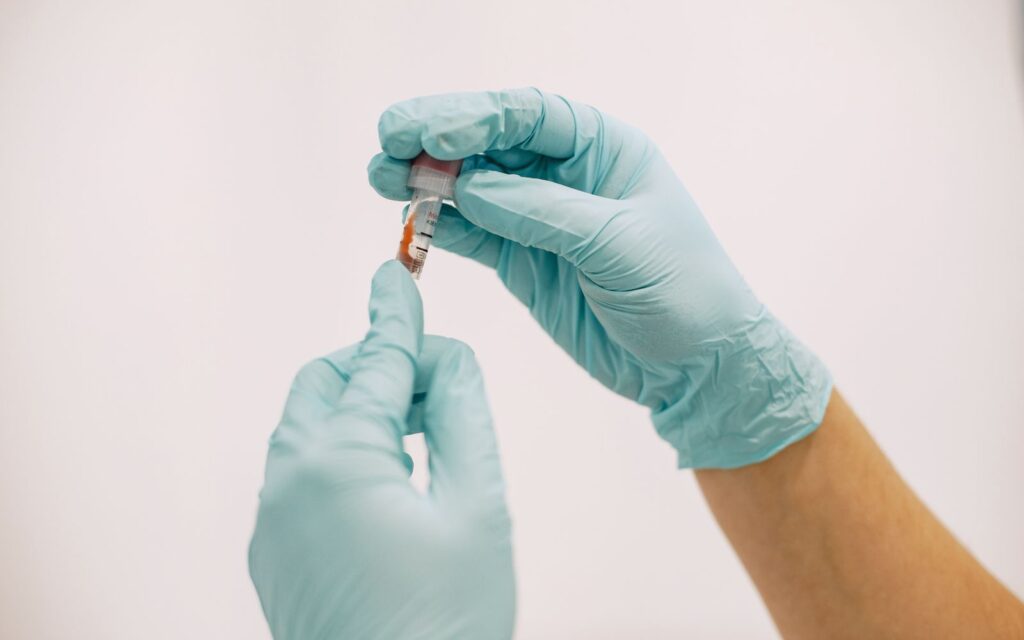
The U.S. Food and Drug Administration (FDA) approved Hibsago (bepirovirsen) on October 20, 2026, as the first antisense oligonucleotide treatment for chronic hepatitis B, to be used alongside established antiviral therapy in selected adults without cirrhosis. The decision followed two randomized phase 3 trials published in The New England Journal of Medicine in which approximately one in five bepirovirsen recipients achieved a sustained, treatment-free response at 72 weeks, compared with none receiving placebo.
Hibsago targets viral RNA rather than only suppressing viral DNA production
Chronic hepatitis B virus (HBV) infection can persist for decades and increase the risk of cirrhosis and liver cancer. Existing nucleoside or nucleotide analogue treatments can suppress HBV DNA effectively, but many patients must continue therapy long term because viral genetic material persists within liver cells. Suppression of viral replication does not necessarily eliminate hepatitis B surface antigen (HBsAg), a viral protein that can remain measurable even when circulating HBV DNA is low.
Bepirovirsen is a chemically modified antisense oligonucleotide (ASO), a short nucleic-acid sequence designed to bind complementary HBV RNA. By targeting viral transcripts, it reduces the production of viral proteins, including HBsAg, and interferes with viral replication. The approach differs from conventional nucleos(t)ide analogue drugs, which primarily inhibit reverse transcription during HBV DNA synthesis.
Lowering HBsAg matters because the loss of this antigen, together with sustained suppression of HBV DNA after treatment ends, is a commonly used definition of a functional cure. Functional cure does not mean complete elimination of every viral DNA template in the liver. HBV can leave persistent genetic reservoirs, and longer-term follow-up is needed to establish how durable a response will be.
The FDA indication applies to adults already receiving hepatitis B antivirals
Hibsago is approved for adults with chronic HBV infection who do not have cirrhosis, have taken a nucleos(t)ide analogue antiviral for at least six months, have suppressed HBV DNA and have HBsAg levels at or below 3,000 IU/mL on an FDA-authorized test. It is an add-on treatment, not a replacement for existing antivirals at the start of therapy.
The FDA also authorized the Roche Elecsys HBsAg II quant II RxDx assay as a companion diagnostic to help identify eligible patients and monitor therapy. Quantitative HBsAg testing is therefore a central part of the treatment pathway, rather than an optional laboratory detail.
The prescribing information specifies subcutaneous 300 mg dosing twice weekly during weeks 1 and 2, followed by 300 mg once weekly during weeks 3 through 24. Each 300 mg dose consists of two 150 mg injections. After the initial supervised dose and appropriate training, some patients or caregivers may administer injections, but scheduled blood testing remains necessary. Background antiviral treatment continues during bepirovirsen therapy and for at least 24 weeks afterward. Only patients meeting defined stopping criteria can discontinue it under specialist supervision.
Two phase 3 trials found functional cure in 19% to 20% of treated patients
The B-Well 1 and B-Well 2 trials were randomized, double-blind studies in adults with chronic HBV infection without cirrhosis. Participants were already receiving stable nucleoside or nucleotide analogue therapy and, for trial enrollment, had HBsAg concentrations above 100 and up to 3,000 IU/mL. They were assigned 2:1 to bepirovirsen 300 mg weekly or placebo for 24 weeks. Patients who met eligibility criteria could stop background therapy at week 48, and the principal outcome was assessed at week 72.
In B-Well 1, 127 of 650 patients (20%) receiving bepirovirsen met the functional-cure endpoint, compared with 0 of 328 receiving placebo. In B-Well 2, the corresponding results were 106 of 570 (19%) versus 0 of 286. Functional cure required sustained HBV DNA below the assay’s lower limit of quantification and loss of HBsAg for at least 24 weeks after treatment discontinuation.
In its approval announcement, the FDA also reported that 24% of bepirovirsen recipients met the criteria to stop their background antivirals. That figure describes eligibility for treatment withdrawal, not the proportion that subsequently sustained the functional-cure endpoint. The FDA’s separate 19% figure refers to patients who maintained viral control with undetectable HBsAg 24 weeks after stopping all hepatitis B therapy. These outcomes should not be treated as interchangeable.
The results establish superiority to placebo on this prespecified endpoint in the studied population. They do not establish that all patients can stop antivirals, or that a treatment-free response will persist indefinitely.
Boxed warnings identify potentially serious liver and bleeding complications
The US prescribing information includes boxed warnings for on-treatment hepatic flares and thrombocytopenia, a reduction in platelet count that can cause dangerous bleeding. Marked elevations in alanine aminotransferase (ALT), a marker of liver-cell injury, can occur during treatment. Clinicians must monitor liver enzymes, bilirubin and platelet counts before and throughout therapy, with interruption or discontinuation dictated by laboratory results.
In pooled phase 3 data, adverse events occurred in 91% of bepirovirsen recipients and 73% of placebo recipients. Serious adverse events occurred in 7% and 4%, respectively. During treatment, grade 3 or higher adverse events occurred in 16% versus 3%. Elevated ALT was the most common grade 3 event with bepirovirsen, reported in 6% of recipients.
Injection-site reactions, fever, fatigue and headache were among the most common reported adverse effects. Labeling also warns about worsening kidney function, serious inflammatory reactions such as vasculitis, problems associated with improper injection, and hepatitis flares after stopping antiviral treatment. These risks make close follow-up a necessary part of the treatment, not simply a precaution.
Hibsago is not recommended for people with hepatitis D coinfection, and patients taking antiviral therapy for both HIV and HBV must not discontinue that therapy without direction from their HIV specialist. Patients with cirrhosis are not included in the approved population.
A functional cure is not the same as eliminating hepatitis B from the body
The most consequential change introduced by bepirovirsen is the possibility of a sustained treatment-free response for some patients who previously needed ongoing suppressive therapy. Even so, the great majority of treated trial participants did not achieve the functional-cure endpoint. Some people may still require long-term antivirals despite completing a bepirovirsen course.
HBV persists within the liver in forms that blood tests do not fully capture. Loss of circulating HBsAg and sustained suppression of HBV DNA are meaningful markers, but they do not prove that all viral material has disappeared or that later reactivation is impossible. Anyone who stops treatment requires follow-up for renewed viral activity and liver injury.
Other liver disorders can also contribute to liver injury. For context, our earlier coverage of metabolic dysfunction-associated fatty liver disease explains another common cause of chronic liver damage, while our report on FDA approval of resmetirom for MASH-related fibrosis covers a very different liver-treatment mechanism. Neither is a substitute for HBV-directed care. The role of persistent viral infections in chronic disease also emerges in research on Epstein-Barr virus reactivation and multiple sclerosis, although that evidence concerns a different virus and clinical condition.
What the evidence cannot yet answer
B-Well 1 and B-Well 2 tested a restricted group of already-treated, noncirrhotic adults. Their results should not be generalized to newly diagnosed patients who have not received antivirals, patients with cirrhosis, children, or people with markedly higher HBsAg concentrations. Trial enrollment criteria also differed slightly from the eventual labeled patient-selection criteria.
The week-72 endpoint establishes sustained suppression for at least 24 weeks after stopping therapy among responders. Whether these responses remain durable for many years, reduce liver cancer or cirrhosis incidence, or translate into a survival advantage is not established by these trials. No head-to-head comparison showed that bepirovirsen is superior to other emerging HBV cure strategies.
The trials were funded by GSK, the company that received FDA approval. Industry sponsorship and author disclosures should be weighed alongside the randomized, blinded design and replication of the result in two separate studies. The efficacy signal is substantial for a difficult-to-cure infection, but it applies to a minority of appropriately selected patients and comes with an intensive safety-monitoring burden.
For clinicians and patients, the immediate change is a new, FDA-approved treatment option that can be considered alongside existing antiviral therapy after quantitative HBsAg testing and a discussion of eligibility, risks and follow-up. The research establishes a route toward treatment-free viral control in some patients; it does not remove the need for long-term HBV care.
References
- Hou J, Lim SG, Buti M, et al. Phase 3 Results of Bepirovirsen Treatment for Chronic Hepatitis B Virus Infection. New England Journal of Medicine. 2026;394:2395-2406. DOI: 10.1056/NEJMoa2515131.
- U.S. Food and Drug Administration. FDA Approves First-of-Its-Kind Chronic Hepatitis B Treatment. October 20, 2026. FDA announcement.
- U.S. Food and Drug Administration. Hibsago (bepirovirsen) injection, U.S. prescribing information. October 2026. Prescribing information.