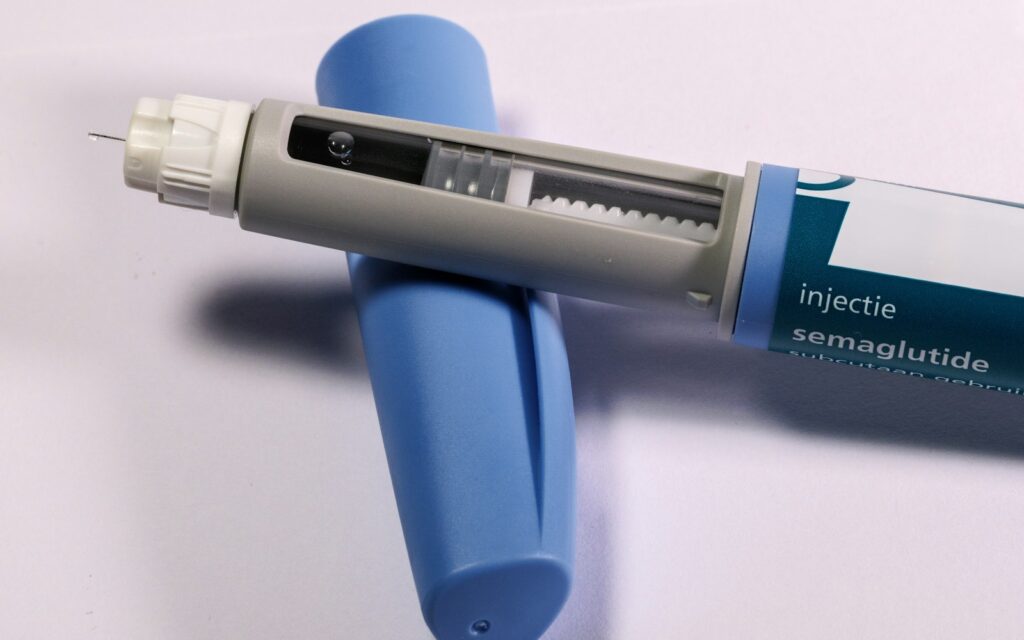
Glucagon-like peptide-1 (GLP-1) drugs have moved from a niche diabetes treatment to the most consequential class in metabolic medicine, and in 2026 the story is no longer only about weight. Once-weekly injections, and now once-daily pills, that mimic a single gut hormone carry approvals or late-stage evidence across obesity, type 2 diabetes, cardiovascular disease, chronic kidney disease, obstructive sleep apnea, and fatty liver disease. This guide explains what GLP-1 (glucagon-like peptide-1) receptor agonists are, which ones are approved, how well they work, and where the field is heading.
GLP-1 is a gut hormone that signals the body has eaten
GLP-1 is released from the gut after a meal. It prompts the pancreas to release insulin, suppresses the counter-regulatory hormone glucagon, slows the rate at which the stomach empties, and acts on appetite centers in the brain to reduce hunger. A GLP-1 receptor agonist is a drug engineered to mimic that hormone and hold its effect far longer than the natural version, which the body breaks down within minutes.
The reason these drugs reach so many organs is anatomical. GLP-1 receptors are not confined to the pancreas and gut. They also sit in the brain, heart, blood vessels, and kidneys. That wide distribution is the thread connecting every section below.
The class now runs from weekly injections to daily pills
More than a dozen GLP-1 agonists are approved in the United States, and for the first time the class includes true oral options for weight loss. The most-used members belong to the semaglutide and tirzepatide families.
| Generic | Brand | Maker | Approved for | Route | Frequency |
|---|---|---|---|---|---|
| semaglutide | Ozempic | Novo Nordisk | Type 2 diabetes | Injection | Weekly |
| semaglutide | Wegovy | Novo Nordisk | Obesity, cardiovascular risk reduction | Injection | Weekly |
| semaglutide | Rybelsus | Novo Nordisk | Type 2 diabetes | Tablet | Daily |
| semaglutide | Wegovy (oral) | Novo Nordisk | Obesity | Tablet | Daily |
| tirzepatide* | Mounjaro | Eli Lilly | Type 2 diabetes | Injection | Weekly |
| tirzepatide* | Zepbound | Eli Lilly | Obesity, obstructive sleep apnea | Injection | Weekly |
| orforglipron | Foundayo | Eli Lilly | Obesity | Tablet | Daily |
| liraglutide | Victoza | Novo Nordisk (+ generics) | Type 2 diabetes | Injection | Daily |
| liraglutide | Saxenda | Novo Nordisk | Obesity | Injection | Daily |
| dulaglutide | Trulicity | Eli Lilly | Type 2 diabetes | Injection | Weekly |
| exenatide | Byetta, Bydureon (+ generics) | Various | Type 2 diabetes | Injection | Twice daily or weekly |
*Tirzepatide is a dual agonist: it activates the GIP (glucose-dependent insulinotropic polypeptide) receptor as well as the GLP-1 receptor. It is grouped with the class because GLP-1 activity is central to its effect.
Two 2026 milestones changed the shape of that table. In December 2025 the FDA approved an oral form of semaglutide for weight loss, the first GLP-1 pill cleared for that use. In April 2026 it approved orforglipron (Foundayo), the first oral small-molecule, non-peptide GLP-1 agonist, which can be taken at any time of day without the food and water restrictions that limit the semaglutide tablet. A higher-dose 7.2 mg semaglutide injection (Wegovy HD) was also approved in March 2026.
Each hormone a drug targets has pushed weight loss higher
The simplest way to read the class is as a staircase. Each added receptor has lifted the ceiling on how much weight the drugs can produce.
Semaglutide, a single GLP-1 agonist, established roughly 15% average weight loss in its pivotal obesity trial (STEP 1). Tirzepatide, by adding the GIP receptor, raised that to around 21% (SURMOUNT-1). Retatrutide, an investigational triple agonist that also targets the glucagon receptor, pushed the ceiling higher still, reaching about 28% at the top dose in its pivotal phase 3 obesity trial reported in 2026, the largest weight loss yet seen with an obesity drug. It is not yet approved. Orforglipron, the new oral pill, sits lower at around 12%, a trade of some efficacy for the convenience and manufacturing scale of a tablet.
The benefits now reach the heart, kidneys, liver, and lungs
Because GLP-1 receptors sit throughout the body, trials have tested these drugs well past glucose and the scale. Several have returned landmark results.
The heart. In the SELECT trial, semaglutide cut major adverse cardiovascular events by 20% in 17,604 adults who had established cardiovascular disease and overweight or obesity but not diabetes. It was the first rigorous evidence that treating obesity itself lowers cardiovascular risk, and it underpins Wegovy’s cardiovascular risk-reduction indication. The wider evidence is collected in our companion piece, GLP-1 drugs: beyond weight loss.
The kidneys. The FLOW trial, the first dedicated kidney-outcomes study of a GLP-1 drug, was stopped early for efficacy. Semaglutide reduced the risk of major kidney events and cardiovascular death by 24% in patients with type 2 diabetes and chronic kidney disease.
The airway. Tirzepatide (Zepbound) became the first medication approved for moderate-to-severe obstructive sleep apnea in adults with obesity, a result covered in our report on the tirzepatide sleep apnea approval.
The liver. In the phase 3 ESSENCE trial, semaglutide 2.4 mg resolved steatohepatitis without worsening fibrosis in 62.9% of patients, against 34.3% on placebo, at 72 weeks. The FDA is reviewing semaglutide for metabolic dysfunction-associated steatohepatitis (MASH). Approval would make it the second drug cleared for the condition after resmetirom, which reaches the liver through a different route, a thyroid hormone receptor-beta agonist rather than a GLP-1. For background on the disease these drugs target, see fatty liver is now the world’s most common liver disease.
The failing heart. In STEP-HFpEF, semaglutide improved symptoms and physical function in patients with obesity and heart failure with preserved ejection fraction, a group that has had few effective options.
Earlier signals point further still. Small studies suggest GLP-1 drugs may reduce craving behaviors in addiction, and researchers are probing effects in neurodegeneration. Both remain preliminary and are not approved uses.
Side effects are common, and stopping usually brings the weight back
These drugs are effective, not gentle. Nausea, vomiting, constipation, and diarrhea are common, especially while the dose is being escalated. Rapid weight loss can strip muscle alongside fat unless it is paired with resistance exercise and adequate protein. Gallbladder problems occur, and pancreatitis is a rare risk.
The class also carries a boxed warning for thyroid C-cell tumors, based on rodent studies. The drugs are not recommended for people with a personal or family history of medullary thyroid carcinoma or multiple endocrine neoplasia type 2.
The most consistent limitation is durability. When treatment stops, appetite returns and much of the lost weight comes back, which is why clinicians increasingly frame these as long-term therapies for a chronic condition rather than short courses.
The next wave points to triple agonists and simpler dosing
The pipeline is the most competitive in metabolic medicine, and it moves along two axes: more receptors for greater effect, and easier administration for wider use.
CagriSema, a fixed-dose combination of the amylin analogue cagrilintide with semaglutide, produced 22.7% mean weight loss at 68 weeks in the REDEFINE 1 trial and awaits an FDA decision. Retatrutide, the triple GLP-1, GIP, and glucagon agonist, produced about 28% weight loss at its top dose in its pivotal phase 3 obesity trial in 2026, and its maker expects to seek approval by early 2027. Behind them sit monthly injectables such as maridebart cafraglutide (MariTide) and a deep bench of dual and triple agonists including survodutide, mazdutide, and pemvidutide, alongside further oral small molecules. The direction of travel is clear: higher efficacy, delivered more conveniently.
Cost and access remain the real bottleneck
For all the clinical progress, price still governs who gets these drugs. Branded injectables list above roughly $1,000 per month in the United States, and insurance coverage for obesity, as opposed to diabetes, remains uneven. The new oral options may widen access: orforglipron’s self-pay price starts around $149 per month at the lowest dose, with a manufacturer savings card bringing eligible commercially insured patients closer to $25.
One low-cost route has closed. Compounded semaglutide, widely used during the shortage years, has largely disappeared. The FDA declared the semaglutide shortage resolved in February 2025, and enforcement against pharmacies compounding copies took effect that spring. A further FDA proposal in 2026 would tighten the rules again. Patients who relied on compounded versions have been steered back to branded drugs or the newer pills.
Check where you stand
Body-mass index and body composition are the thresholds most GLP-1 obesity approvals are written around. Our BMI calculator and body-fat calculator show where you fall against the ranges used in these trials.
What the evidence cannot yet answer
The GLP-1 class has produced some of the most consistent trial evidence in recent metabolic medicine, but four questions remain genuinely open. First, durability: about two-thirds of weight lost during treatment returns within a year of stopping, and whether the organ-specific benefits (heart, kidney, liver) persist after discontinuation is not established. Long-term treatment appears to be the expected model, similar to statins or antihypertensives, rather than a limited course. Second, safety at extended exposure: a 2026 pooled analysis of 31 placebo-controlled trials (40,274 patients) found no detectable increase in acute pancreatitis. The thyroid C-cell signal seen in rodents remains a class labeling concern with no clear human signal to date, and monitoring continues.
Third, generalizability: benefits have been demonstrated in populations selected for high baseline risk of specific outcomes (SELECT for prior cardiovascular disease, FLOW for reduced kidney function, SURMOUNT-OSA for moderate-severe sleep apnea). Whether the same magnitude of benefit extends to people at lower baseline risk taking these drugs primarily for weight is inferred rather than proven. Fourth, access: US list prices remain roughly $1,000 to $1,300 per month, and payer coverage varies sharply by indication. The clinical case for these drugs is stronger than the economic system’s capacity to deliver them at scale, and that gap is a structural problem that will not be solved by more trial data.
References
- Wilding JPH, Batterham RL, Calanna S, et al. Once-Weekly Semaglutide in Adults with Overweight or Obesity (STEP 1). New England Journal of Medicine, 2021; 384: 989-1002. DOI: 10.1056/NEJMoa2032183
- Jastreboff AM, Aronne LJ, Ahmad NN, et al. Tirzepatide Once Weekly for the Treatment of Obesity (SURMOUNT-1). New England Journal of Medicine, 2022; 387: 205-216. DOI: 10.1056/NEJMoa2206038
- Jastreboff AM, Kaplan LM, Frias JP, et al. Triple-Hormone-Receptor Agonist Retatrutide for Obesity (phase 2). New England Journal of Medicine, 2023; 389: 514-526. DOI: 10.1056/NEJMoa2301972
- Eli Lilly and Company. Lilly’s triple agonist, retatrutide, delivered powerful weight loss in pivotal Phase 3 obesity trial (TRIUMPH-1). Press release, May 21, 2026. Available at: investor.lilly.com
- Lincoff AM, Brown-Frandsen K, Colhoun HM, et al. Semaglutide and Cardiovascular Outcomes in Obesity Without Diabetes (SELECT). New England Journal of Medicine, 2023; 389: 2221-2232. DOI: 10.1056/NEJMoa2307563
- Perkovic V, Tuttle KR, Rossing P, et al. Effects of Semaglutide on Chronic Kidney Disease in Patients with Type 2 Diabetes (FLOW). New England Journal of Medicine, 2024; 391: 109-121. DOI: 10.1056/NEJMoa2403347
- Kosiborod MN, Abildstrom SZ, Borlaug BA, et al. Semaglutide in Patients with Heart Failure with Preserved Ejection Fraction and Obesity (STEP-HFpEF). New England Journal of Medicine, 2023; 389: 1069-1084. DOI: 10.1056/NEJMoa2306963
- Sanyal AJ, Newsome PN, Kliers I, et al. Phase 3 Trial of Semaglutide in Metabolic Dysfunction-Associated Steatohepatitis (ESSENCE). New England Journal of Medicine, 2025; 392: 2089-2099. DOI: 10.1056/NEJMoa2413258
- Malhotra A, Grunstein RR, Fietze I, et al. Tirzepatide for the Treatment of Obstructive Sleep Apnea and Obesity (SURMOUNT-OSA). New England Journal of Medicine, 2024; 391: 1193-1205. DOI: 10.1056/NEJMoa2404881