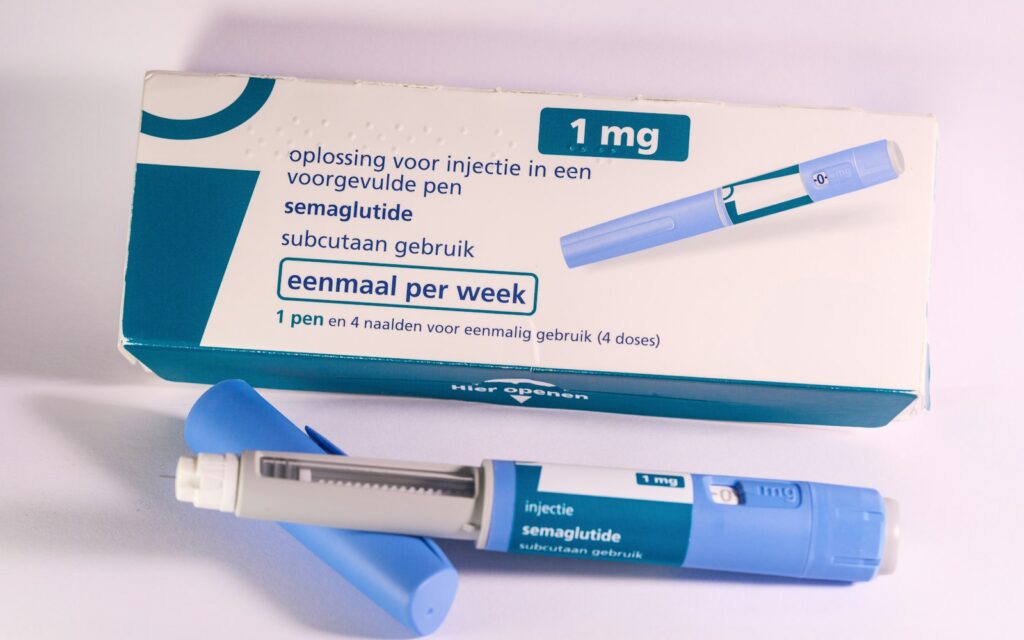
Gastrointestinal symptoms are the dominant adverse effects of glucagon-like peptide-1 (GLP-1)-based obesity medicines, with nausea, diarrhea, vomiting, and constipation occurring most often during dose escalation in the pivotal STEP 1 semaglutide and SURMOUNT-1 tirzepatide trials published in The New England Journal of Medicine. Serious complications are much less common, but current FDA labels warn about pancreatitis, gallbladder disease, dehydration-related kidney injury, severe gastrointestinal reactions, and several drug-specific risks that require clinical attention.
Nausea and other gastrointestinal effects account for most day-to-day symptoms
GLP-1 receptor agonists slow gastric emptying, reduce appetite, and alter gastrointestinal signaling. Those effects contribute to their therapeutic action but also explain why nausea, vomiting, diarrhea, constipation, abdominal discomfort, indigestion, and belching are common. Tirzepatide acts on both glucose-dependent insulinotropic polypeptide (GIP) and GLP-1 receptors, but its tolerability pattern is similarly dominated by gastrointestinal symptoms.
In STEP 1, 1,961 adults with overweight or obesity without diabetes were randomized to once-weekly semaglutide 2.4 mg or placebo for 68 weeks. Among semaglutide-treated participants, nausea occurred in 44.2%, diarrhea in 31.5%, vomiting in 24.8%, and constipation in 23.4%. Gastrointestinal adverse events led 4.5% of semaglutide participants to stop treatment, compared with 0.8% on placebo.
The trial investigators described nausea and diarrhea as “typically transient and mild-to-moderate in severity.” The dosing schedule reflects that tolerability problem: semaglutide is started at a low dose and increased gradually. Our GLP-1 drugs explainer describes how the class affects appetite, gastric emptying, insulin secretion, and glucagon signaling.
Tirzepatide shows the same dose-escalation pattern but not identical event rates
SURMOUNT-1 randomized 2,539 adults with obesity or overweight and at least one weight-related complication, excluding diabetes, to tirzepatide 5 mg, 10 mg, 15 mg, or placebo for 72 weeks. Tirzepatide is also approved for obstructive sleep apnea in adults with obesity. Nausea occurred in 24.6%, 33.3%, and 31.0% of participants across the three tirzepatide doses, compared with 9.5% on placebo. Diarrhea occurred in 18.7% to 23.0%, constipation in 11.7% to 17.1%, and vomiting in 8.3% to 12.2%.
Most gastrointestinal events were mild or moderate and occurred primarily during the 20-week dose-escalation period. Adverse events of any type caused treatment discontinuation in 4.3%, 7.1%, and 6.2% of the 5 mg, 10 mg, and 15 mg groups, respectively, compared with 2.6% on placebo.
Pancreatitis and gallbladder disease are uncommon but clinically important warnings
Current FDA prescribing information for both Wegovy and Zepbound warns about acute pancreatitis. The symptom that matters most is persistent or severe abdominal pain, sometimes radiating to the back, with or without nausea and vomiting. FDA labeling instructs clinicians to discontinue the drug if pancreatitis is suspected and evaluate the patient.
Gallbladder disease is a separate concern. In STEP 1, gallbladder-related disorders were reported in 2.6% of semaglutide-treated participants and 1.2% of placebo participants. Current Zepbound labeling reports cholecystitis in 0.7% of treated patients and 0.2% of placebo patients across two weight-reduction trials. Rapid or substantial weight loss itself can also increase gallstone risk, which complicates attribution.
These risks are part of the broader benefit-risk calculation for medicines that also have effects beyond weight reduction. Our review of GLP-1 drugs beyond weight loss covers cardiovascular, kidney, liver, and sleep-related outcomes that may matter when treatment decisions are individualized.
Vomiting and diarrhea become more concerning when they cause dehydration
The kidney warning in current FDA labels is largely about volume depletion rather than a direct toxic effect on the kidney. Repeated vomiting or diarrhea can cause dehydration, which can precipitate acute kidney injury, particularly in people with pre-existing kidney disease or those taking other medicines that affect fluid balance.
Severe gastrointestinal reactions are also specifically listed in current Wegovy and Zepbound prescribing information, and neither product is recommended in patients with severe gastroparesis. Persistent inability to keep fluids down, worsening weakness, very low urine output, or severe ongoing abdominal symptoms should not be treated as routine dose-escalation discomfort.
Because delayed gastric emptying may leave residual stomach contents despite standard fasting, FDA labeling also warns about pulmonary aspiration during general anesthesia or deep sedation. Patients taking a GLP-1-based medicine should tell the procedural and anesthesia team before planned surgery or endoscopy.
Hypoglycemia risk depends heavily on what other diabetes medicines are being used
GLP-1-based medicines do not usually produce the same hypoglycemia risk as insulin when used alone. The risk rises when they are combined with insulin or an insulin secretagogue such as a sulfonylurea, and FDA labels advise that doses of those agents may need adjustment.
Semaglutide and tirzepatide labels also warn about diabetic retinopathy complications in patients with type 2 diabetes, particularly when glucose control improves rapidly in someone who already has retinopathy. That issue is different from a general eye toxicity and is most relevant to patients with diabetes and established retinal disease.
Tirzepatide is also approved for obstructive sleep apnea in adults with obesity, which means the same medication may be prescribed for overlapping metabolic and sleep-related indications. The safety profile still needs to be considered in the context of the individual patient’s other medicines and conditions.
The thyroid boxed warning comes from rodent tumors, not proven human causation
Wegovy and Zepbound carry boxed warnings because semaglutide and tirzepatide caused thyroid C-cell tumors in rodents. FDA states that it is unknown whether either drug causes medullary thyroid carcinoma in humans. Both are contraindicated in people with a personal or family history of medullary thyroid carcinoma or Multiple Endocrine Neoplasia syndrome type 2.
FDA removed the suicidal-behavior warning after a 2026 safety review
Older articles and medication pages may still state that GLP-1 weight-loss drugs carry a warning for suicidal thoughts or behavior. In January 2026, FDA requested removal of that warning from Wegovy, Zepbound, and Saxenda after a comprehensive review found no increased risk associated with GLP-1 receptor agonists.
That regulatory change illustrates why side-effect information needs to be checked against current labeling rather than copied from older summaries. New symptoms affecting mood still deserve medical attention, but FDA no longer considers suicidal ideation or behavior an established labeling risk for these medicines.
What the evidence cannot yet answer
Clinical trials quantify adverse events under controlled conditions, but they do not predict exactly how one person will tolerate treatment. Event rates vary with dose, titration speed, diabetes status, other medications, baseline gastrointestinal disease, and the specific product used.
STEP 1 was funded by Novo Nordisk, and SURMOUNT-1 was funded by Eli Lilly.
The best-supported practical distinction is therefore between expected, often transient gastrointestinal symptoms and warning signs that are persistent, severe, or associated with dehydration, marked abdominal pain, allergic symptoms, or another specific labeled risk. Side effects should be interpreted in the context of the prescribed drug and dose rather than as a single class-wide checklist.
References
- Wilding JPH, Batterham RL, Calanna S, et al. Once-Weekly Semaglutide in Adults with Overweight or Obesity. N Engl J Med. 2021;384:989-1002. DOI: 10.1056/NEJMoa2032183.
- Jastreboff AM, Aronne LJ, Ahmad NN, et al. Tirzepatide Once Weekly for the Treatment of Obesity. N Engl J Med. 2022;387:205-216. DOI: 10.1056/NEJMoa2206038.