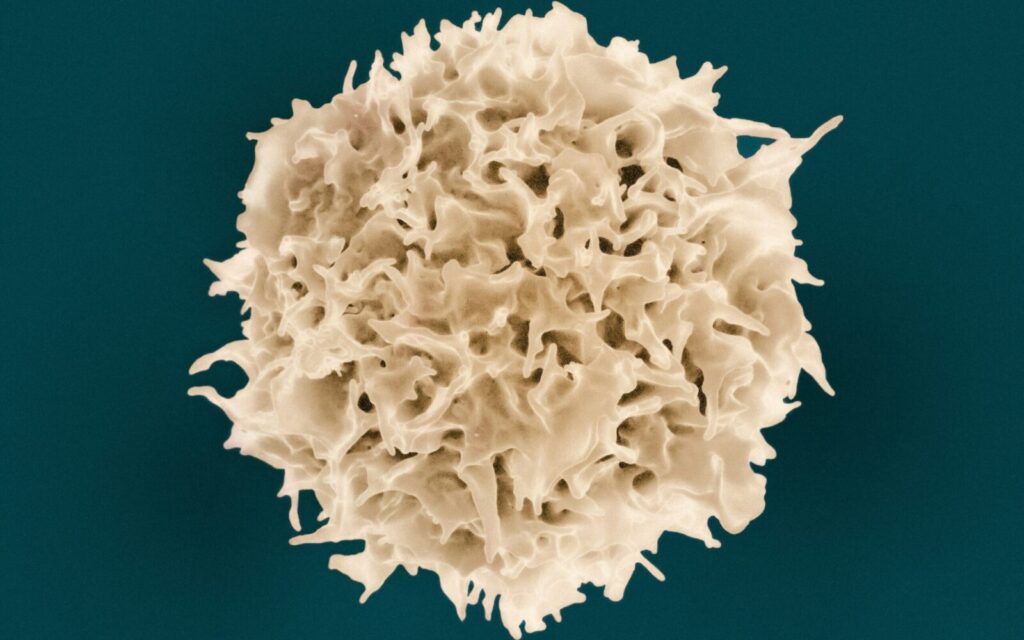
Researchers have identified a cell-surface protein called MPZL1 as a potential new target for CAR-T cell therapy in solid tumors, reporting tumor regression across several preclinical models in a study published in Nature Communications. In mice bearing MPZL1-positive human liver cancer xenografts, a single intravenous dose of engineered CAR-T cells rapidly reduced tumor size, and 7 of 11 tumors were completely eliminated without relapse through 60 days of follow-up.
Solid tumors remain one of the hardest problems for CAR-T therapy
CAR-T cell therapy has transformed treatment for several blood cancers, but translating the same approach to solid tumors has been much harder. One of the main problems is target selection.
CAR-T cells are engineered to recognize a specific protein, or antigen, on the surface of a cancer cell. In blood cancers, some antigens are abundant on malignant cells and comparatively predictable across patients. Solid tumors are more heterogeneous, and many potential targets are either absent from some tumor cells or also present on healthy tissues, raising the risk of damaging normal organs.
The tumor microenvironment creates additional barriers. Engineered T cells may struggle to penetrate dense tumor tissue, and suppressive signals inside tumors can weaken their function. Those challenges help explain why CAR-T therapy has so far been far more successful in leukemia, lymphoma and multiple myeloma than in most solid cancers.
The researchers searched for amplified proteins on the cancer-cell surface
The new study took a different approach to finding CAR-T targets. Rather than focusing only on genes that directly drive cancer growth, the researchers searched for genes that are frequently amplified in tumors and encode proteins displayed on the cell surface.
Using genomic data from 2,703 tumors together with cell-surface protein databases and gene-expression datasets, the team identified a cluster of amplified genes on chromosome 1q. That region is frequently amplified in hepatocellular carcinoma, breast cancer and lung adenocarcinoma.
One candidate stood out: MPZL1, short for myelin protein zero-like 1. The protein belongs to the immunoglobulin superfamily and sits on the plasma membrane, making it physically accessible to an engineered immune receptor.
MPZL1 amplification was found in up to 75% of patients with certain solid tumor types in the datasets analyzed by the researchers. Importantly, the study did not establish MPZL1 as a classic cancer-driving gene. Instead, its value may come from being highly displayed on tumor cells, creating a molecular flag that engineered T cells can recognize.
MPZL1 was abundant in tumors but limited in many normal tissues
For a CAR-T target to be useful, high tumor expression is not enough. The same target must also be limited enough in healthy tissues to create a therapeutic window.
The researchers examined MPZL1 protein expression across 2,335 human tissue samples and reported strong membrane staining in multiple tumor types, while most normal tissues showed absent or weak expression. Some normal reproductive tissues were exceptions.
That pattern is encouraging because CAR-T cells cannot distinguish between a cancer cell and a healthy cell if both display enough of the target antigen. So-called on-target, off-tumor toxicity has been one of the major safety concerns in solid-tumor CAR-T development.
The expression data therefore supported MPZL1 as a candidate worth testing, but they do not prove the target will be safe in patients.
Engineered MPZL1 CAR-T cells selectively killed cancer cells in the lab
The researchers first developed an antibody that recognized the extracellular portion of MPZL1, then used its binding region to build a chimeric antigen receptor.
Human T cells engineered with this receptor selectively killed MPZL1-positive cancer cells in vitro. When MPZL1 was genetically knocked out from otherwise similar tumor cells, the CAR-T cells lost much of that activity, supporting the idea that the effect depended on recognition of MPZL1 rather than nonspecific T-cell toxicity.
The team tested the cells against several human cancer cell lines, including hepatocellular carcinoma and breast cancer models.
A single CAR-T dose caused rapid tumor regression in mice
The most striking results came from animal experiments.
In one model, immunodeficient mice carried human hepatocellular carcinoma tumors with high MPZL1 expression or matched tumors in which MPZL1 had been knocked out. Once the tumors reached an average volume of about 360 mm³, the mice received a single intravenous dose of 10 million MPZL1 CAR-T cells.
The MPZL1-positive tumors initially increased slightly in size, then rapidly regressed. By day 8, average tumor volume had fallen to about one-quarter of its starting size. Seven of 11 MPZL1-positive tumors were completely eradicated and did not relapse during follow-up to day 60.
By contrast, MPZL1-knockout tumors continued to grow and did not respond to the same CAR-T cells.
A similar experiment using human breast cancer xenografts also showed a survival advantage in mice with MPZL1-positive tumors compared with tumors lacking the target.
The CAR-T cells also worked in a liver tumor model that formed inside the organ
Subcutaneous xenografts are useful experimental systems, but they do not fully reproduce the anatomy or microenvironment of a tumor growing in its organ of origin.
To address that limitation, the researchers created genetically defined liver tumors directly within mouse livers. The tumors were engineered either to express human MPZL1 or a control protein.
After a single dose of MPZL1 CAR-T cells, mice with the MPZL1-positive liver tumors showed no detectable tumor nodules at the experimental endpoint and survived through day 100. Control tumors lacking MPZL1 progressed rapidly.
Tissue analysis seven days after treatment showed CAR-T cells surrounding and infiltrating MPZL1-positive tumor nodules, with some lesions showing no histologically detectable tumor cells.
Human tumor explants provided another layer of evidence
The study also tested the CAR-T cells in freshly resected human tumor tissue grown ex vivo. Samples included colorectal cancer, colorectal liver metastases, pancreatic ductal adenocarcinoma, ovarian cancer, gastric cancer and renal cancer.
MPZL1 CAR-T cells infiltrated MPZL1-positive tumor tissue more strongly than several comparison T-cell populations and showed higher levels of effector molecules including granzyme B, interferon gamma, tumor necrosis factor alpha and interleukin-2.
In a smaller set of matched tumor and normal tissue samples, CAR-T infiltration and immune activation were lower in the normal tissues. That supports tumor selectivity, but the explant experiments were short-term and involved a limited number of samples.
The biggest unanswered question is safety in humans
The results are promising, but they should not be interpreted as evidence that MPZL1 CAR-T therapy is ready for clinical use.
The CAR used in this study recognized human MPZL1 but not the mouse version of the protein. That prevented the researchers from fully testing what would happen if the engineered T cells encountered low levels of MPZL1 in normal tissues throughout a living organism.
The mouse experiments also used immunodeficient animals, which are useful for testing human cells but cannot reproduce all of the immune interactions that occur in patients.
The authors explicitly note that the study does not fully resolve systemic on-target, off-tumor toxicity. Before human testing, researchers will need more extensive safety studies and a better understanding of which normal tissues express enough MPZL1 to be clinically relevant.
The target-discovery strategy may be as important as MPZL1 itself
The broader idea behind the study is that amplified cell-surface proteins may provide a reservoir of CAR-T targets even when those proteins are not the mutations driving tumor growth.
That is different from conventional precision oncology, which often begins by asking which mutation makes the cancer grow and whether that mutation can be blocked with a drug. Here, the researchers instead asked which amplified proteins make tumor cells visibly different from normal cells and therefore potentially recognizable by engineered immune cells.
If that strategy holds up, it could expand the pool of solid tumors that are amenable to CAR-T therapy. It also fits with a broader shift in cancer immunotherapy toward improving both target selection and T-cell persistence. Bites of Bio recently covered another part of that problem: how chronic MEK signaling can push cancer-fighting T cells toward exhaustion.
The findings are encouraging, but still preclinical
The study provides several layers of evidence for MPZL1 as a CAR-T target: genomic analysis, tumor-versus-normal expression data, cancer-cell killing in vitro, tumor regression in two mouse systems and selective activity in human tissue explants.
What it does not provide is human efficacy or safety data. No patient has yet been shown to benefit from MPZL1-directed CAR-T therapy.
The next major step will be determining whether the target is safe enough and consistent enough across patients to justify clinical testing. If it is, MPZL1 could become both a candidate therapy and a proof of principle for a broader way of finding CAR-T targets in solid tumors.
References
- Jiménez-Vázquez S, Berthel A, Patsis C, et al. Cancer-driver-agnostic targeting of amplified surface proteins identifies MPZL1 for selective CAR-T cell therapy. Nature Communications. 2026;17:9695. DOI: 10.1038/s41467-026-77465-5.
- National Cancer Institute. CAR T Cells: Engineering Patients’ Immune Cells to Treat Their Cancers. NCI overview.