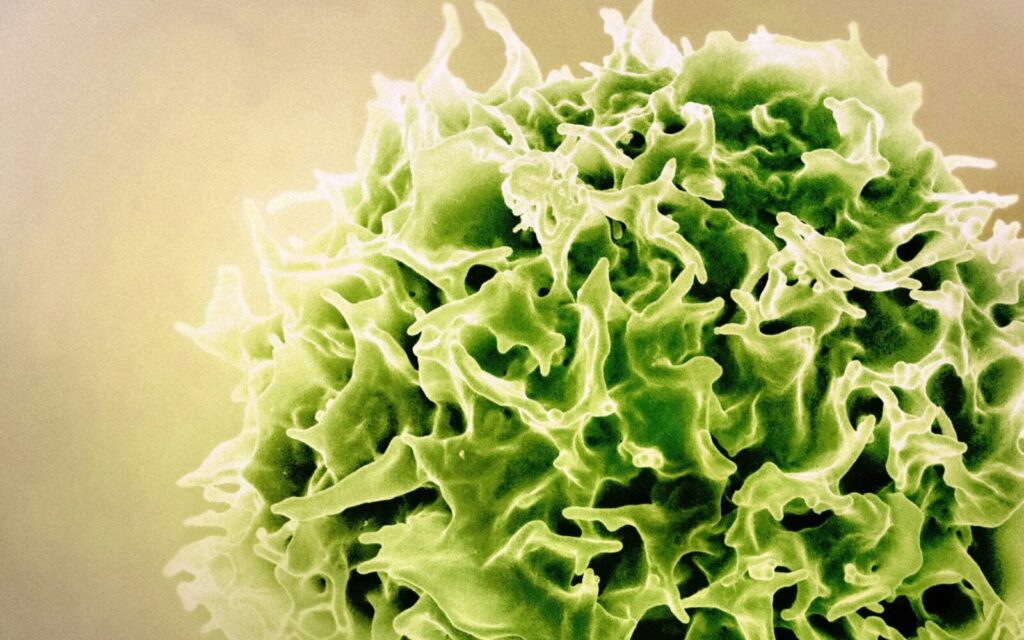
Chronic MEK signaling can push cancer-fighting CD8+ T cells toward terminal exhaustion by increasing their energy demand and disrupting mitochondrial function, according to a study published in Immunity. The work, led by researchers at Memorial Sloan Kettering Cancer Center, used laboratory and animal models to show that sustained MEK activity drives protein production, ATP consumption, NADH accumulation and oxidative stress, while MEK inhibition preserved a more self-renewing T-cell state.
T-cell exhaustion can limit how long immunotherapy keeps working
Many cancer immunotherapies depend on T cells remaining active long enough to recognize and destroy malignant cells. Checkpoint inhibitors, for example, release inhibitory signals that restrain T-cell activity, allowing the immune system to mount a stronger antitumor response.
That response does not always last. When CD8+ T cells are exposed continuously to tumor antigens, they can enter a state known as T-cell exhaustion. Exhausted cells progressively lose proliferative capacity and cytotoxic function and often express inhibitory receptors such as programmed death-1 (PD-1), cytotoxic T-lymphocyte antigen 4 (CTLA-4) and lymphocyte activation gene-3 (LAG-3).
This is one reason an initially effective immunotherapy can lose effectiveness over time. Bites of Bio has covered other approaches intended to strengthen antitumor immunity, including personalized mRNA cancer vaccines and engineered viral immunotherapy for advanced melanoma. The new study focuses instead on the metabolic state of the T cell itself.
Persistent MEK signaling increased the energy cost of staying activated
MEK is part of the mitogen-activated protein kinase (MAPK) signaling pathway, a network that helps cells respond to growth and activation signals. In T cells, signaling through the T-cell receptor activates MEK as part of the program that drives proliferation and production of effector proteins.
The researchers found that when T-cell receptor stimulation became chronic, that activation program carried a large metabolic cost. Sustained MEK signaling increased global protein synthesis, which raised demand for adenosine triphosphate (ATP), the cell’s main energy-transfer molecule.
That increase in energy demand was accompanied by accumulation of reduced nicotinamide adenine dinucleotide (NADH) in mitochondria. As mitochondrial redox balance deteriorated, reactive oxygen species accumulated and mitochondrial function declined.
The authors’ model is therefore not simply that exhausted T cells run out of energy. Instead, chronic activation keeps asking the cells to spend energy at a rate that their mitochondria cannot sustain indefinitely.
MEK inhibition lowered metabolic demand while preserving proliferation
The investigators compared inhibition of several signaling components activated downstream of the T-cell receptor. MEK inhibition stood out because it reduced nutrient uptake and mitochondrial NADH accumulation while restoring T-cell proliferation under conditions of chronic stimulation.
Blocking MEK also reduced the transition toward terminal exhaustion. At the transcriptional level, MEK inhibition lowered RNA polymerase II phosphorylation and reduced transcription at genes associated with effector function and terminal exhaustion, while preserving transcription of genes associated with T-cell memory.
That created an apparent trade-off. The cells produced fewer highly energy-intensive cytotoxic proteins at any one time, but they remained capable of proliferating and persisting for longer.
Memorial Sloan Kettering researchers describe this as a balance between immediate killing capacity and long-term persistence. A T cell operating at maximum output may attack strongly for a short period, whereas one with restrained MEK signaling may maintain function for longer.
The findings came from experimental systems, not a cancer treatment trial
The study combined cell-culture experiments with animal models. It did not randomize cancer patients to receive a MEK inhibitor, and it did not show that adding a MEK inhibitor to immunotherapy improves survival in people.
That distinction is essential because MEK inhibitors are already approved for some cancers, particularly tumors with specific alterations in the MAPK pathway. Their effects on immune cells can be complex, and suppressing MEK too strongly could also reduce the immediate effector activity needed to control a tumor.
The authors therefore do not argue that every patient receiving immunotherapy should also receive a MEK inhibitor. The potential value may depend on tumor burden, the number of tumor-reactive T cells and how much immune persistence is needed to maintain control.
The mechanism could be especially relevant when there are relatively few tumor-reactive immune cells or a large amount of disease, situations in which preserving a limited T-cell population may matter more than maximizing its short-term output.
The mechanism may matter beyond checkpoint inhibitors
If the metabolic model is correct, it could apply to several forms of T-cell-based cancer therapy.
Checkpoint inhibitors rely on endogenous T cells that already recognize tumor antigens. Chimeric antigen receptor (CAR) T-cell therapy uses engineered T cells, but long-term persistence is also an important determinant of durable response. Tumor-infiltrating lymphocyte therapy expands immune cells removed from a tumor and gives them back to the patient, again making persistence a central challenge.
Bispecific antibodies can also force sustained contact between T cells and cancer cells, potentially driving the same kind of chronic stimulation that contributes to exhaustion.
The concept is therefore broader than one drug combination. It suggests that controlling the metabolic cost of activation could become another way to engineer more durable immune responses.
Existing MEK inhibitors make the idea testable, but translation is not automatic
One practical reason the finding has attracted attention is that MEK inhibitors already exist as approved cancer drugs. That means researchers do not need to invent an entirely new drug class before testing whether carefully timed or dosed MEK inhibition can preserve T-cell function in patients.
However, repurposing an available drug is not the same as proving a therapeutic strategy. MEK signaling is important in many normal and malignant cells, and systemic MEK inhibition can produce adverse effects. The dose and timing required to alter T-cell metabolism may not be the same as those used to directly inhibit tumor-cell signaling.
There is also a biological tension built into the approach. MEK supports the production of proteins that help T cells kill cancer cells. Reducing MEK activity may preserve T-cell longevity partly by reducing that immediate cytotoxic output. The clinical question is therefore not whether MEK should simply be turned off, but whether it can be modulated in a way that produces a better balance between potency and persistence.
The study reframes exhaustion as excessive metabolic demand
T-cell exhaustion has often been described as a loss of function after prolonged stimulation. The new work adds a more specific metabolic explanation: chronic antigen exposure keeps MEK active, which drives transcription and protein synthesis, raises ATP demand and eventually overwhelms mitochondrial redox capacity.
That model helps connect signaling, metabolism and cell fate. It also explains why an exhausted T cell can remain metabolically active even while losing the ability to sustain an effective antitumor response.
The next step is clinical. Researchers will need to determine whether the metabolic effects seen in experimental models can be reproduced safely in patients and whether preserving T-cell persistence actually improves responses to checkpoint inhibitors, CAR T cells or other immunotherapies.
References
- Mitra T, Rahman J, Hwee M, et al. MEK-dependent bioenergetic demand drives terminal CD8+ T cell exhaustion. Immunity. 2026;59(8):2215-2231.e9. DOI: 10.1016/j.immuni.2026.06.012.
- Memorial Sloan Kettering Cancer Center. New Strategy Could Prevent T Cell Exhaustion and Boost Immunotherapy. July 21, 2026. MSK research summary.