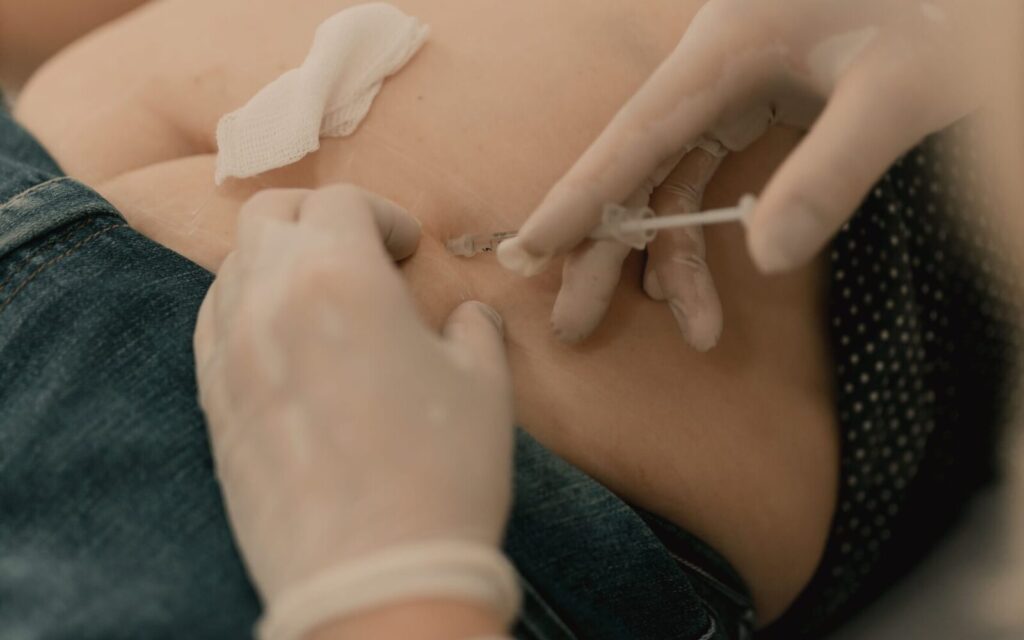
CBL-514, an experimental injectable drug designed to trigger programmed death of fat cells, reduced abdominal subcutaneous fat in randomized phase 2 studies and was also associated with lower visceral fat in a small MRI subgroup presented at the 2026 European Association for the Study of Diabetes meeting. The findings are early and do not yet establish CBL-514 as a treatment for obesity, but they point to a different strategy from appetite-suppressing drugs such as GLP-1 receptor agonists.
CBL-514 is designed to remove fat cells rather than suppress appetite
Most of the recent attention in obesity pharmacology has focused on drugs that alter appetite and energy intake. GLP-1 drugs such as semaglutide and dual GIP/GLP-1 agonists such as tirzepatide work through hormonal signaling that changes hunger, satiety and glucose regulation.
CBL-514 takes a different approach. It is a small-molecule injectable drug intended to act locally within adipose tissue. Preclinical and clinical studies describe it as an adipocyte-apoptosis agent, meaning it is designed to activate programmed cell death in fat cells.
That distinction matters. Apoptosis is a regulated cellular process, unlike uncontrolled tissue necrosis. The phase 2 development program has therefore focused on whether CBL-514 can reduce localized abdominal fat without causing the kind of nonspecific tissue injury that would make a fat-dissolving injection clinically unacceptable.
CBL-514 is administered through multiple injections into the abdominal subcutaneous fat layer. It is not an oral drug, not a weekly systemic obesity injection, and not currently approved by the U.S. Food and Drug Administration.
Randomized phase 2 studies showed reductions in abdominal subcutaneous fat
One peer-reviewed phase 2 trial, published in Aesthetic Surgery Journal, randomized 76 adults to CBL-514 or placebo in a single-blind, placebo-controlled design. Participants could receive as many as four abdominal treatments, given every four weeks, at a dose of 2 mg/cm² and a maximum of 600 mg per treatment.
At eight weeks after the final treatment, 69.6% of evaluable participants in the CBL-514 group had lost at least 150 mL of abdominal subcutaneous fat volume, compared with 0% of evaluable placebo participants. At least a 200 mL reduction was seen in 60.9% of the CBL-514 group and none of the placebo group at that follow-up.
A later randomized phase 2b study enrolled 108 adults with moderate to severe abdominal subcutaneous fat. Participants were assigned 1:1 to CBL-514 or placebo and could receive up to four treatments at three-week intervals.
In that study, 76.7% of CBL-514-treated participants in the full analysis set improved by at least one grade on a clinician-reported abdominal fat scale at 12-week follow-up, compared with 18.9% of placebo participants. Patient-reported ratings showed a similar difference.
MRI measurements supported the clinical ratings. The least-squares mean reduction in abdominal subcutaneous fat volume was 152.9 mL from baseline in the CBL-514 group at four weeks after the last treatment, corresponding to a 20.3% reduction. Placebo showed essentially no change.
The newest data suggest an effect on visceral fat, but the subgroup was small
The data presented at the 2026 European Association for the Study of Diabetes meeting extended the question beyond the fat directly under the skin. Investigators analyzed MRI data from a subgroup of participants enrolled in two phase 2 studies, CBL-0204 and CBL-0205, to examine visceral adipose tissue.
The analysis included 40 people: 23 who received CBL-514 and 17 who received placebo. Participants had body mass index values between 22 and 30 kg/m² and received lower-abdominal injections every three weeks for up to 12 weeks, with the number of treatments adjusted according to abdominal fat thickness.
Four weeks after the final treatment, average visceral fat volume had decreased 12.01% from baseline in the CBL-514 group and increased 5.68% in the placebo group. At the later follow-up, visceral fat remained 10.45% below baseline with CBL-514 while it was 11.76% above baseline with placebo.
Those numbers are intriguing because visceral fat is metabolically important and is linked to insulin resistance and cardiometabolic risk. But this was a small subgroup analysis presented at a scientific meeting, not a dedicated randomized trial powered primarily to establish a visceral-fat effect. The result therefore needs confirmation.
CBL-514 should not yet be described as a proven weight-loss drug
Some coverage has called CBL-514 a new weight-loss injection, but that description runs ahead of the strongest human evidence.
The peer-reviewed phase 2 studies were designed to test reduction of localized abdominal subcutaneous fat. The ongoing phase 3 SUPREME-01 study is likewise evaluating CBL-514 for abdominal subcutaneous fat reduction, not for treatment of obesity as defined by a target percentage of whole-body weight loss.
SUPREME-01 is a randomized, double-blind, placebo-controlled phase 3 trial expected to enroll roughly 320 adults in the United States and Canada. Participants have moderate or severe abdominal fat and body mass index values below 30 kg/m². The trial’s primary efficacy outcomes are based on abdominal fat-rating scales rather than a conventional obesity endpoint such as at least 5%, 10% or 15% total body-weight loss.
That makes CBL-514 fundamentally different, at least in its current clinical program, from treatments such as tirzepatide or semaglutide. The phase 3 program is testing a targeted fat-reduction indication rather than a systemic obesity indication.
The idea that CBL-514 could reduce weight regain after GLP-1 therapy is still preclinical
One of the most attention-grabbing claims around CBL-514 is that it might help people maintain weight loss after stopping a GLP-1-based drug. That possibility is biologically interesting, but it has not been demonstrated in people.
In a diet-induced obesity rat study presented through the American Diabetes Association, animals received tirzepatide alone, CBL-514 alone, the combination, or control treatment. At the point when tirzepatide was stopped, body weight had fallen 14.5% with tirzepatide alone and 21.8% with the combination.
Three weeks after tirzepatide discontinuation, weight regain was 55.9% in the tirzepatide-only group compared with 25.2% in the combination group.
That finding supports a hypothesis: reducing the number or size of adipocytes might change how much fat can be regained after appetite-suppressing therapy ends. But rats are not people, and the experiment does not show that CBL-514 will prevent the weight regain often seen after stopping GLP-1 drugs in humans.
A human phase 2 study of CBL-514 combined with tirzepatide has received FDA investigational clearance and is planned to evaluate abdominal fat, body weight, visceral fat, body composition and insulin resistance. Those data will be much more informative than the animal results.
Injection-site reactions have been the most common adverse effects so far
Across the phase 2 studies, the most common treatment-emergent adverse effects were local injection-site reactions such as pain, swelling, redness and bruising. These were generally described as mild to moderate and transient.
The 2026 phase 2b paper reported no signal of tissue necrosis or nerve injury, outcomes that are particularly relevant for an injectable agent intended to destroy adipocytes locally.
Short-term tolerability is only one part of the safety question. The phase 2b trial had a relatively high discontinuation rate, and follow-up was limited to 12 weeks after the final treatment. Phase 3 and longer-term studies will need to establish durability, uncommon adverse events and what happens to treated tissue over longer periods.
The clinical program is heavily tied to the drug’s developer
CBL-514 is being developed by Caliway Biopharmaceuticals. The 2026 phase 2b study was sponsored by the company, several authors were Caliway employees and shareholders, and other investigators received company research funding. The paper states that company employees were primarily responsible for study design and data interpretation.
That does not invalidate the randomized results, but it makes independent replication important, especially for a drug that could enter a large commercial market spanning aesthetic fat reduction and potentially metabolic medicine.
Phase 3 will determine whether the early fat-reduction signal holds up
The most solid conclusion today is narrower than the headlines. CBL-514 has produced statistically significant reductions in abdominal subcutaneous fat in randomized phase 2 trials, and preliminary MRI data suggest it may also reduce visceral fat.
What has not yet been shown is that CBL-514 is an effective obesity treatment, produces large sustained losses in total body weight, reduces cardiovascular events, or prevents human weight regain after GLP-1 therapy.
The ongoing phase 3 program will test whether the localized abdominal fat effect is reproducible in larger, double-blind studies. Separate human trials will be needed to determine whether the more ambitious metabolic and weight-maintenance claims move from animal models into clinical practice.
References
- Lin YF, et al. Efficacy and Safety of CBL-514 Injection in Reducing Abdominal Subcutaneous Fat: A Randomized, Single-Blind, Placebo-Controlled Phase II Study. Aesthetic Surgery Journal. 2025;45(6):611-624. DOI: 10.1093/asj/sjaf032.
- Lorenc ZP, et al. Randomized Phase 2b Trial of CBL-514 Injection for Abdominal Subcutaneous Fat Reduction With Clinician- and Patient-Reported Outcomes and MRI Assessment. Aesthetic Surgery Journal. 2026. DOI: 10.1093/asj/sjag092.
- European Association for the Study of Diabetes. New weight-loss injection targets fat cells: CBL-514 selectively induces apoptosis of fat cells. October 1, 2026. EASD news release.
- American Diabetes Association. Combination of Tirzepatide with CBL-514 an Adipocyte-Apoptosis Agent Improves Weight Loss Durability and Adipose Tissue Remodeling in Diet-Induced Obese Rats. Diabetes. 2026;75(Suppl 1):1821-P. Conference abstract.
- ClinicalTrials.gov. A Study to Evaluate the Efficacy and Safety of CBL-514 Injection for Reducing Subcutaneous Fat (SUPREME-01). NCT07140939. Clinical trial record.