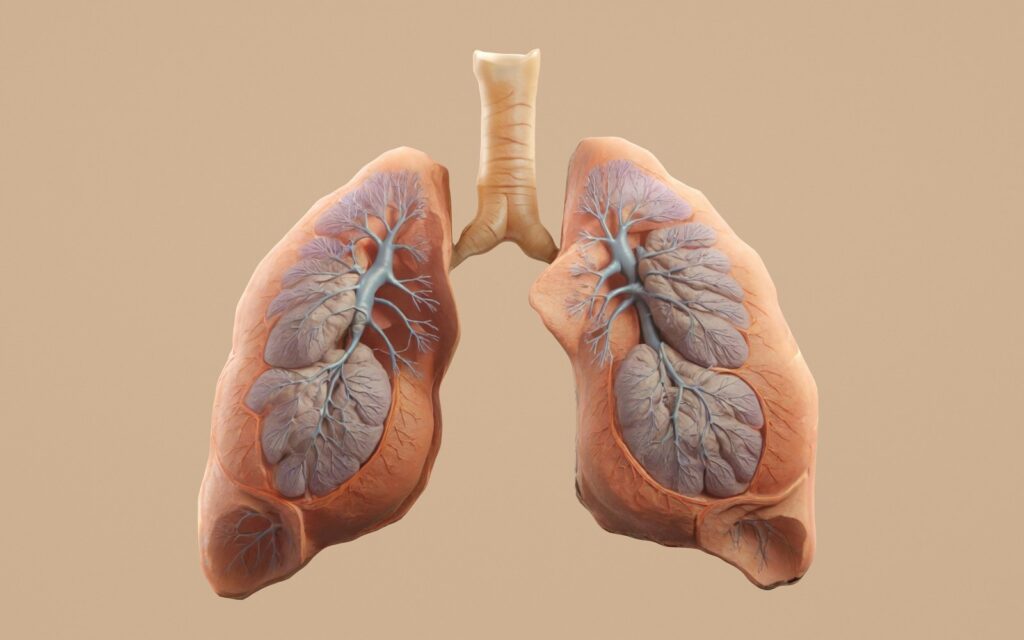
Reduced exercise capacity in people who report persistent breathlessness after COVID-19 reflects impaired peripheral oxygen extraction rather than a heart or lung defect visible on standard imaging, according to invasive cardiopulmonary exercise testing reported by Singh and colleagues in Chest in 2022. The finding, from a case-controlled study of patients who had recovered from mostly mild acute infection but still had exertional intolerance months later, helped resolve a paradox in long COVID care: patients with real, measurable disability whose chest imaging and resting lung function look normal.
Long COVID’s respiratory picture is broader than damaged lungs
The 2024 update of the RECOVER research index, drawing on 13,647 adult participants across the NIH-funded RECOVER cohort, identified 11 symptoms that most clearly separate long COVID from post-acute recovery. Four of them are respiratory or exertional: chronic cough, shortness of breath, chest pain, and post-exertional malaise. The update grouped patients into five symptom clusters. Only one of those clusters is dominated by respiratory findings, which is part of why long COVID has been difficult to define with a single test or clinical picture.
Many patients presenting with persistent breathlessness have normal chest X-rays, normal computed tomography (CT) scans, and normal resting pulmonary function tests. That combination once led some clinicians to attribute their symptoms to anxiety or deconditioning. The evidence base has since shifted.
Invasive exercise testing revealed an oxygen-extraction problem
In the Singh study, patients who had recovered from COVID-19 without cardiopulmonary disease were compared with matched control participants during invasive cardiopulmonary exercise testing, in which arterial and mixed venous blood are sampled during graded exercise. Peak oxygen consumption in the recovered group was 70% of predicted, compared with 131% of predicted in controls. Systemic oxygen extraction, measured by the arterial-mixed venous oxygen difference relative to arterial oxygen content, was 0.49 in recovered patients against 0.78 in controls, with cardiac output preserved.
The authors concluded that “patients who have recovered from COVID-19 without cardiopulmonary disease demonstrate a marked reduction in peak VO2 from a peripheral rather than a central cardiac limit, along with an exaggerated hyperventilatory response during exercise.” The pattern points to a peripheral rather than central problem. The heart pumps normally, the lungs deliver oxygen to the blood normally, but the tissues fail to extract and use it. Subsequent work from the same group and others has linked this pattern to mitochondrial dysfunction, endothelial injury, and abnormal muscle fiber recruitment. A separate line of evidence has documented small airway disease and reduced diffusing capacity in subsets of patients with more visible lung involvement.
Post-exertional malaise sets a constraint on rehabilitation
Post-exertional malaise, a delayed worsening of symptoms after exertion within the person’s previous tolerance, is one of the most consistent findings and one that long COVID shares with myalgic encephalomyelitis and chronic fatigue syndrome (ME/CFS). It changes the calculus for rehabilitation. Conventional aerobic reconditioning of the kind used after cardiac events or elective surgery can worsen symptoms in these patients. Pacing, symptom-titrated activity, and breathing retraining for dysfunctional breathing patterns are the current mainstays of care.
Prevalence has declined but is still substantial
Prevalence estimates vary widely by methodology, sampling, and definition. The most recent nationally representative US analysis, published in Frontiers in Public Health in April 2026 (Jia et al., 88,731 adults), reports that the share of adults ever reporting long COVID rose from 7.0% in 2022 to 8.4% in 2023, then plateaued at 8.3% in 2024. The share currently reporting long COVID has stayed stable at about 3.3 to 3.6% across all three years. Global systematic reviews, which include hospitalized cohorts and broader time windows, produce much higher pooled estimates, most recently 36% among people with confirmed COVID-19 (Hou et al., Open Forum Infectious Diseases, 2025). The gap between those figures reflects real differences in populations sampled and definitions used, not a disagreement about whether long COVID exists.
Treatment is symptom-based, and trials are still early
No drug is approved specifically for long COVID. The RECOVER program is running several phase 2 platform trials testing candidates for the most disabling symptom clusters, including cognitive dysfunction, sleep disturbance, and exercise intolerance. Anti-inflammatory strategies, drugs targeting persistent viral reservoirs, and mitochondrial-support agents are under investigation. In routine care, management is currently symptom-based: pacing, adapted pulmonary rehabilitation, breathing retraining, and treatment of co-occurring conditions such as postural orthostatic tachycardia and dysautonomia.
What the evidence cannot yet answer
Whether the oxygen-extraction defect Singh and colleagues described in earlier variants applies equally to more recent Omicron-era long COVID is not yet clear. Long-term trajectories, whether symptoms fully resolve or leave residual disability, are still being followed. The overlap between long COVID and ME/CFS is close but not complete, and whether therapeutics that work for one will work for the other remains an open question. And the mechanisms behind sex, age, and racial disparities in long COVID risk are described but not yet explained.
References
- Singh I, Joseph P, Heerdt PM, et al. Persistent Exertional Intolerance After COVID-19: Insights From Invasive Cardiopulmonary Exercise Testing. Chest, 2022; 161: 54-63. DOI: 10.1016/j.chest.2021.08.010
- Geng LN, Erlandson KM, Hornig M, et al. 2024 Update of the RECOVER-Adult Long COVID Research Index. JAMA, 2024. DOI: 10.1001/jama.2024.24184
- Jia X, Wang J, Cui X, et al. Trends in long COVID among US adults, 2022-2024. Frontiers in Public Health, 2026; 14: 1809635. DOI: 10.3389/fpubh.2026.1809635
- Davis HE, McCorkell L, Vogel JM, Topol EJ. Long COVID: major findings, mechanisms and recommendations. Nature Reviews Microbiology, 2023; 21: 133-146. DOI: 10.1038/s41579-022-00846-2