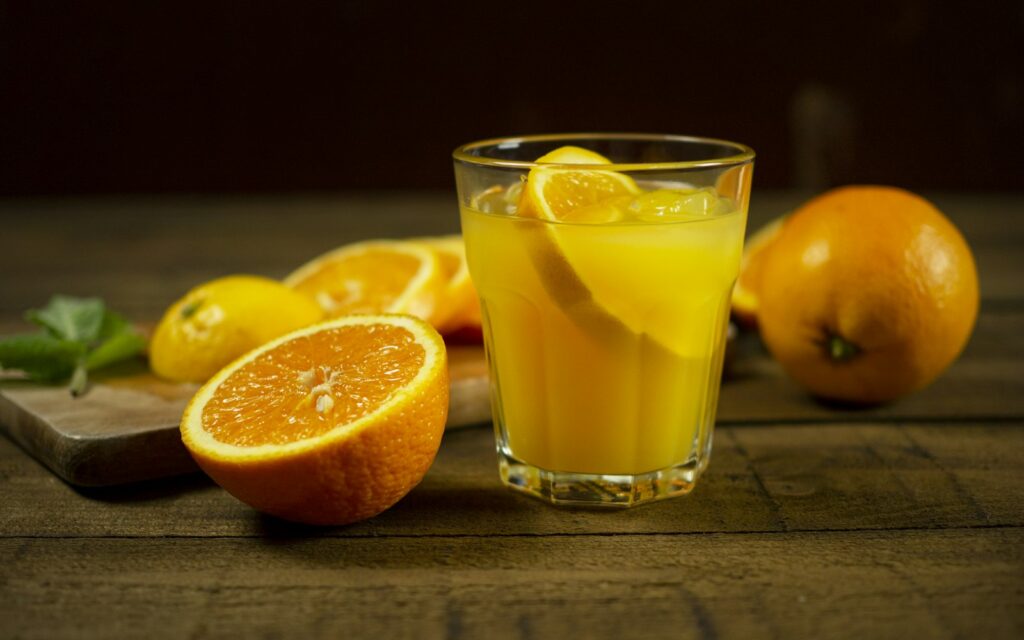
Moderate consumption of 100% fruit juice, including 100% orange juice, is not linked to higher cardiovascular disease (CVD) risk. It also shows a modest protective association against stroke at low daily intakes. That is the conclusion of a systematic review and meta-analysis of 21 cohort studies and 35 randomized controlled trials (RCTs), published in the European Journal of Nutrition in 2021. The pooled analysis, led by Lanfranco D’Elia at the University of Naples “Federico II,” also showed small reductions in blood pressure in randomized trials. The study was funded by an unrestricted grant from the European Fruit Juice Association, a disclosure worth keeping in mind.
Why the question needed a careful answer
Public health messaging on fruit juice has been inconsistent for years. Nutrition authorities warn against sugar-sweetened drinks. They also note that 100% fruit juice contains similar levels of natural sugar without the fiber of whole fruit. Some large observational studies have linked fruit juice to weight gain and higher type 2 diabetes risk. Others have found modest cardiovascular benefits, particularly from citrus juices rich in a flavonoid called hesperidin. Randomized trials have generally been small and short. A pooled analysis was needed to synthesize the accumulated evidence and clarify what 100% fruit juice actually does to cardiovascular risk.
How the review was conducted
D’Elia and colleagues worked under the Italian Society of Human Nutrition (SINU) and were endorsed by the Italian Society for Cardiovascular Prevention (SIPREC). They pre-registered their protocol (PROSPERO CRD42019135577) and searched multiple databases for studies published through August 2019. Studies had to use 100% fruit juice as the exposure. Cohort studies had to measure cardiovascular outcomes. Randomized trials had to measure blood pressure, arterial function, blood lipids, or glucose metabolism. Studies of sugar-sweetened fruit drinks and juice blends were excluded. Dose-response meta-analyses were performed where sufficient data allowed.
The final analysis included 21 prospective cohort studies and 35 RCTs. The cohort studies measured associations with cardiovascular events and mortality. The randomized trials measured effects on intermediate outcomes: blood pressure, arterial compliance, blood vessel function, blood lipids, and glucose metabolism.
What the analysis found
The dose-response analysis showed a protective effect against stroke at intakes of up to about 200 mL per day. A similar protective effect was seen for total cardiovascular events at intakes of up to about 170 mL per day. Above those thresholds, the benefit disappeared. No significant association was found between 100% fruit juice and either coronary heart disease or diabetes risk.
In the pooled randomized trial data, 100% fruit juice intake had favorable effects on multiple cardiovascular intermediate outcomes:
- Systolic blood pressure: mean difference −3.14 mmHg
- Diastolic blood pressure: mean difference −1.68 mmHg
- Arterial compliance (carotid-femoral pulse wave velocity): −0.38 m/s
- Endothelial function (flow-mediated dilation): +2.10%
Neutral effects were found on body weight, body mass index, waist circumference, blood lipids, and glucose metabolism. The authors interpreted the stroke protection as probably mediated by the observed reductions in blood pressure. Studies of citrus juices, and orange juice specifically, contributed substantially to both the cohort and randomized-trial findings. This fits with separate evidence that hesperidin has favorable effects on blood vessel function.
How the effect size should be read
A systolic blood pressure reduction of about 3 mmHg is modest at the individual level but meaningful at the population level. Blood pressure changes of that size, sustained over years, correspond to real reductions in stroke incidence in large studies. The observed reductions in arterial stiffness and improvements in blood vessel function offer a plausible mechanism for the stroke protection. The benefit is dose-limited. It appears at intakes of roughly 150 to 200 mL per day, or one small glass. It disappears at higher intake levels. Larger daily servings likely deliver enough additional sugar to offset the benefits, though this analysis did not directly test that trade-off.
What the evidence cannot yet answer
The analysis had important limitations. The cohort studies varied in their assessment methods, follow-up duration, and adjustment for confounders such as diet quality and physical activity. Residual confounding is possible in observational data. People who choose to drink 100% fruit juice may differ from non-drinkers in ways not fully captured by adjustment variables. The randomized trials were mostly short-term, lasting weeks to a few months. They measured intermediate outcomes rather than actual cardiovascular events. Whether the observed blood pressure reductions translate to long-term reductions in stroke or cardiovascular death has not been directly shown in trials.
Most notably, the study was funded through an unrestricted grant from the European Fruit Juice Association. The authors disclosed the funding source. They stated that the funder had no role in study design, data analysis, or manuscript preparation. Industry funding of nutrition research is nevertheless known to correlate with more favorable interpretations of the funded product. Readers should weigh the findings with that context in mind.
The bottom line for readers
The old anti-juice narrative treated all fruit drinks the same. It missed an important distinction. Sugar-sweetened drinks, including juice cocktails and sodas, are clearly linked to worse cardiovascular and metabolic outcomes. 100% juice, in small daily amounts, appears different. It is not a substitute for whole fruit. Whole fruit delivers the same flavonoids plus fiber that juice loses in processing. But for anyone who enjoys a morning glass, the current evidence suggests they can keep enjoying it. The considerations are the size of the pour (roughly 150 to 250 mL, not diner-sized), the choice of product (100% juice, not sweetened blends), and how it fits into the day’s overall fruit intake.
The trial authors concluded that “100%FJ consumption is not associated with higher CV risk” and that “a non-linear inverse dose-response relationship occurs between 100%FJ consumption and CV disease, in particular for risk of stroke, probably mediated by the decrease in blood pressure.” For a population-level nutrition question that has cycled through years of conflicting headlines, the pooled evidence supports moderate consumption of 100% fruit juice as compatible with, and probably modestly favorable to, cardiovascular health.
References
- D’Elia L, Dinu M, Sofi F, Volpe M, Strazzullo P; SINU Working Group, Endorsed by SIPREC. 100% Fruit juice intake and cardiovascular risk: a systematic review and meta-analysis of prospective and randomised controlled studies. European Journal of Nutrition, 2021; 60(5): 2449-2467. DOI: 10.1007/s00394-020-02426-7